
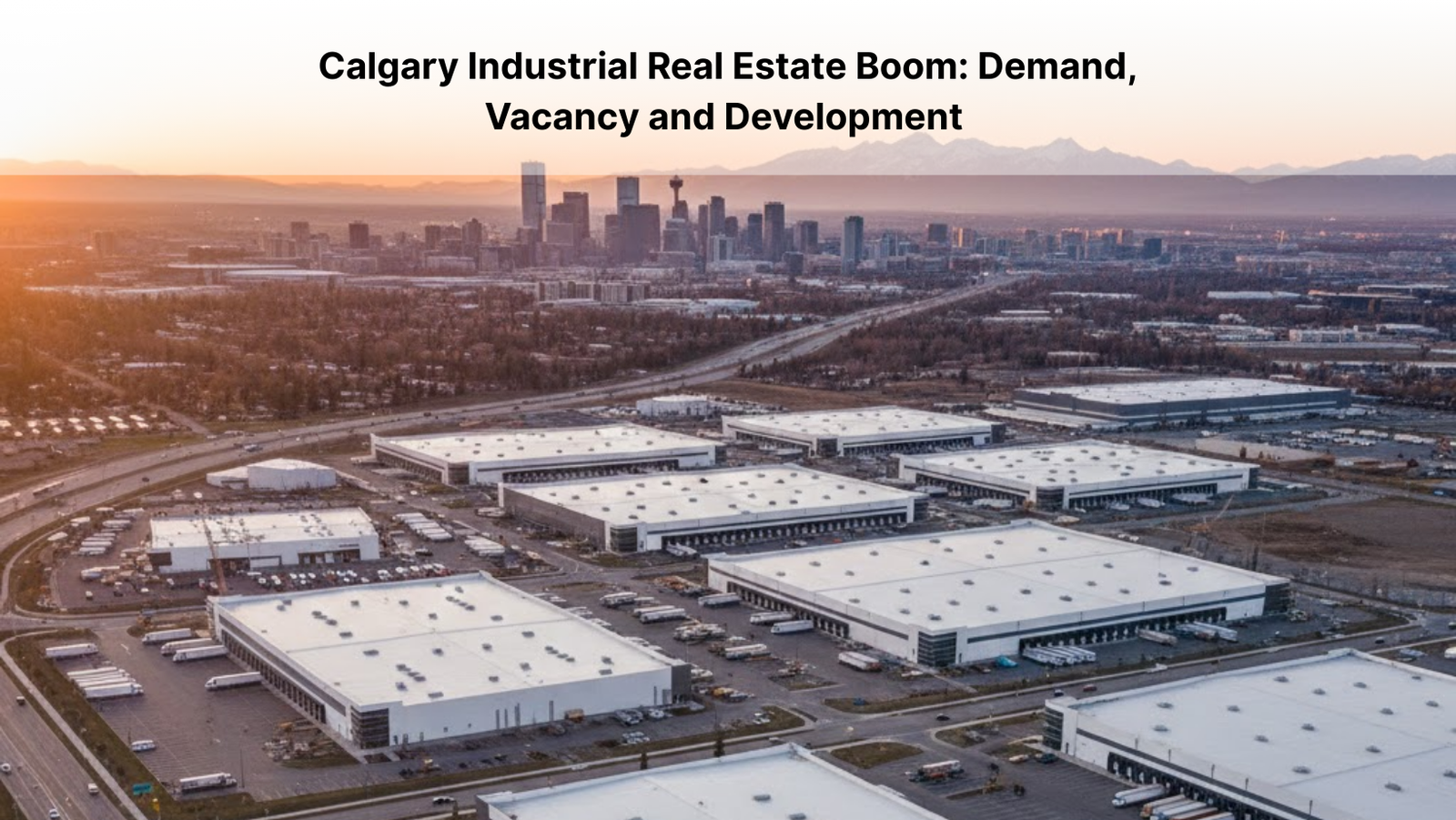
Calgary Industrial Real Estate Boom: Demand, Vacancy and Development
Jan 8, 2026
- 0
Is Calgary quietly becoming one of Canada’s most powerful industrial real estate success stories?
If you have driven along Stoney Trail lately or watched new warehouses rise near logistics corridors, you have probably felt it. Something big is happening. In this deep dive, I promise you clarity: by the end of this blog, you will understand why the boom is happening, where the opportunities lie, and how buyers, investors, and businesses can position themselves smartly in Calgary’s evolving industrial landscape.
Why Everyone Is Suddenly Talking About Industrial Space in Calgary
Let’s start with a simple observation. Five years ago, industrial real estate rarely stole the spotlight. Residential made the headlines, downtown office towers dominated conversations, and warehouses quietly did their job in the background.
Fast forward to today and the script has flipped.
In Calgary, industrial real estate has gone from “boring but stable” to “hot, competitive, and strategic.” Warehouses are filling faster, developers are racing to secure land, and tenants are locking in space earlier than ever. The Calgary warehouse market 2025 is shaping up to be one of the tightest and most opportunity-rich cycles the city has seen.
And yes, this boom didn’t happen overnight.
The Big Picture of Calgary Industrial Real Estate
Before we zoom into vacancy rates and development pipelines, we need context.
Calgary has always been a logistics-friendly city. Flat land, efficient road networks, proximity to Western Canada markets, and a business-first mindset. But several forces converged at once, accelerating demand for Calgary industrial real estate.
What changed?
- E-commerce exploded and never really slowed down
- Supply chains shifted closer to home
- Population growth boosted consumption
- Businesses demanded faster delivery times
- Investors chased stable, income-producing assets
Industrial real estate quietly became the backbone of modern commerce. And Calgary was ready.
Demand Drivers Fueling the Industrial Boom
Let’s talk demand. Because without demand, there is no boom.
E-commerce and the Need for Speed
We all want things faster. Same-day delivery is no longer a luxury; it’s an expectation.
Retailers and logistics companies need strategically located warehouses to meet those timelines. Calgary’s ring road, intermodal access, and proximity to major highways make it a logistics sweet spot. This has directly increased demand for Calgary logistics development, especially large-format distribution centers.
Population Growth and Consumption
More people equals more goods. Calgary continues to attract families, professionals, and newcomers, all of whom need food, furniture, electronics, and everyday essentials.
Those goods need somewhere to live before they reach store shelves or front doors. That “somewhere” is industrial real estate.
Business Relocation and Expansion
Another trend I see daily: companies relocating from higher-cost markets. Compared to Vancouver and Toronto, Calgary offers:
- Lower land costs
- Competitive lease rates
- Less congestion
- A skilled workforce
For businesses running on tight margins, this matters. It’s no surprise that national and regional tenants are planting roots here.
Calgary Industrial Vacancy: Why Space Is Getting Harder to Find
Here’s where things get interesting.
Calgary industrial vacancy has been trending downward, and not by accident.
What Low Vacancy Really Means
Low vacancy doesn’t just mean fewer available buildings. It means:
- Increased competition among tenants
- Rising lease rates
- Stronger negotiating power for owners
- Faster absorption of new developments
For tenants, this can feel stressful. For investors and developers, it’s a green light.
The Reality on the Ground
I often hear clients say, “Jai, we’ll just wait six months and see.”
Here’s my honest answer: waiting in a tightening market can cost you options.
Industrial users are now pre-leasing space before construction finishes. Some are even redesigning operations to fit what’s available rather than holding out for the perfect layout.
That’s how you know Calgary industrial real estate is in a landlord-favorable phase.
Calgary Warehouse Market 2025: What the Future Looks Like
Let’s look ahead.
Why 2025 Is a Defining Year
The Calgary warehouse market 2025 is shaping up to be a turning point rather than a peak. New supply is coming, but demand is keeping pace.
Key expectations include:
- Continued low vacancy in prime locations
- Strong absorption of new logistics facilities
- Growing interest in mid-bay and small-bay industrial units
- Increased land competition for future projects
In simple terms, balance will remain tight.
Size Preferences Are Shifting
Not every tenant wants a million-square-foot distribution center. We’re seeing rising demand for:
- 10,000–50,000 sq ft flex industrial
- Last-mile logistics spaces
- Hybrid warehouse-office buildings
This diversification is healthy. It creates opportunity at multiple price points.
Calgary Logistics Development: Where the Growth Is Happening
If you want to understand industrial real estate, follow the cranes.
Key Development Corridors
Several areas continue to attract major Calgary logistics development projects:
- Near Stoney Trail and Deerfoot Trail
- Southeast industrial nodes
- Areas with easy highway and rail access
These locations reduce transportation costs and improve delivery efficiency. Developers know this, and they are acting accordingly.
Modern Features Tenants Expect
Today’s warehouses aren’t just big boxes. Tenants are asking for:
- Higher clear ceiling heights
- Larger bay doors
- Energy-efficient systems
- Flexible layouts
- Employee-friendly amenities
Developments that meet these standards lease faster. The market is rewarding quality.
Investor Perspective: Why Industrial Is the Quiet Overachiever
Let me switch hats for a moment and talk investor to investor.
Industrial real estate doesn’t always get the glamour of residential flips or downtown towers. But it delivers something better: consistency.
Why investors love Calgary industrial real estate:
- Longer lease terms
- Lower tenant turnover
- Predictable cash flow
- Strong tenant demand
- Less sensitivity to economic swings
In uncertain times, boring becomes beautiful.
Challenges to Watch (Because No Market Is Perfect)
Now for a reality check. Every boom has friction points.
Construction Costs
Rising material and labor costs can squeeze development margins. Some projects are delayed or redesigned as a result.
Land Availability
Prime industrial land is finite. As supply tightens, land prices increase, pushing developers to think creatively.
Tenant Adaptation
Tenants need to be flexible. Perfect space at the perfect price is rare in a tight market. Strategic compromise often wins.
What This Means for Businesses Looking for Space
If you are a business owner, here’s my straight advice.
- Start your search early
- Be open to pre-leasing
- Understand market-driven pricing
- Work with local expertise
Industrial real estate is no longer a “last-minute decision.” It’s a strategic move.
What This Means for Investors and Owners
If you own industrial property or are thinking about buying:
- Demand fundamentals are strong
- Vacancy remains favorable
- Long-term outlook is positive
- Asset quality matters more than ever
Smart positioning today sets you up for stability tomorrow.
Calgary’s Industrial Story Is Still Being Written
One thing I love about Calgary is its ability to reinvent itself. From energy to tech to logistics, this city adapts.
The industrial boom is not just about buildings. It’s about movement. Goods moving. People working. Businesses growing. Communities benefiting.
And that’s why Calgary industrial real estate feels different this cycle. It’s not hype-driven. It’s function-driven.
I’ve worked in Calgary real estate long enough to spot trends that fade and trends that stick. Industrial real estate belongs firmly in the second category.
Whether you’re tracking Calgary industrial vacancy, planning ahead for the Calgary warehouse market 2025, or exploring Calgary logistics development, one thing is clear: preparation beats reaction.
If this blog helped you see the market more clearly, then Jai Chaudhary Real Estate has kept my promise. Knowledge creates confidence. And in real estate, confidence creates opportunity.
Let’s keep the conversation going.