
Retail & Mixed-Use Spaces in Calgary: Are They Still a Safe Investment in 2026?
Mar 26, 2026
- 0
Introduction
Retail and mixed-use real estate have been in transition for several years. Online shopping, megacommutes, and changing consumer habits have altered how people interact with physical spaces. In Calgary, these developments sparked an interesting debate among investors in 2026: Are retail and mixed-use assets still worth it?
Short answer: yes -though not all retail is created the same now. Today, success depends on location, design, tenant mix, and whether a property comports well with contemporary lifestyles. This article demystifies the situation so you can understand what’s at stake and what’s up for grabs.
What Are Retail and Mixed-Use Properties?
Retail properties are spaces designed for businesses such as shops, restaurants, cafes, gyms, and service providers. Mixed-use properties combine retail with other uses, most commonly residential and office, within the same building or development.
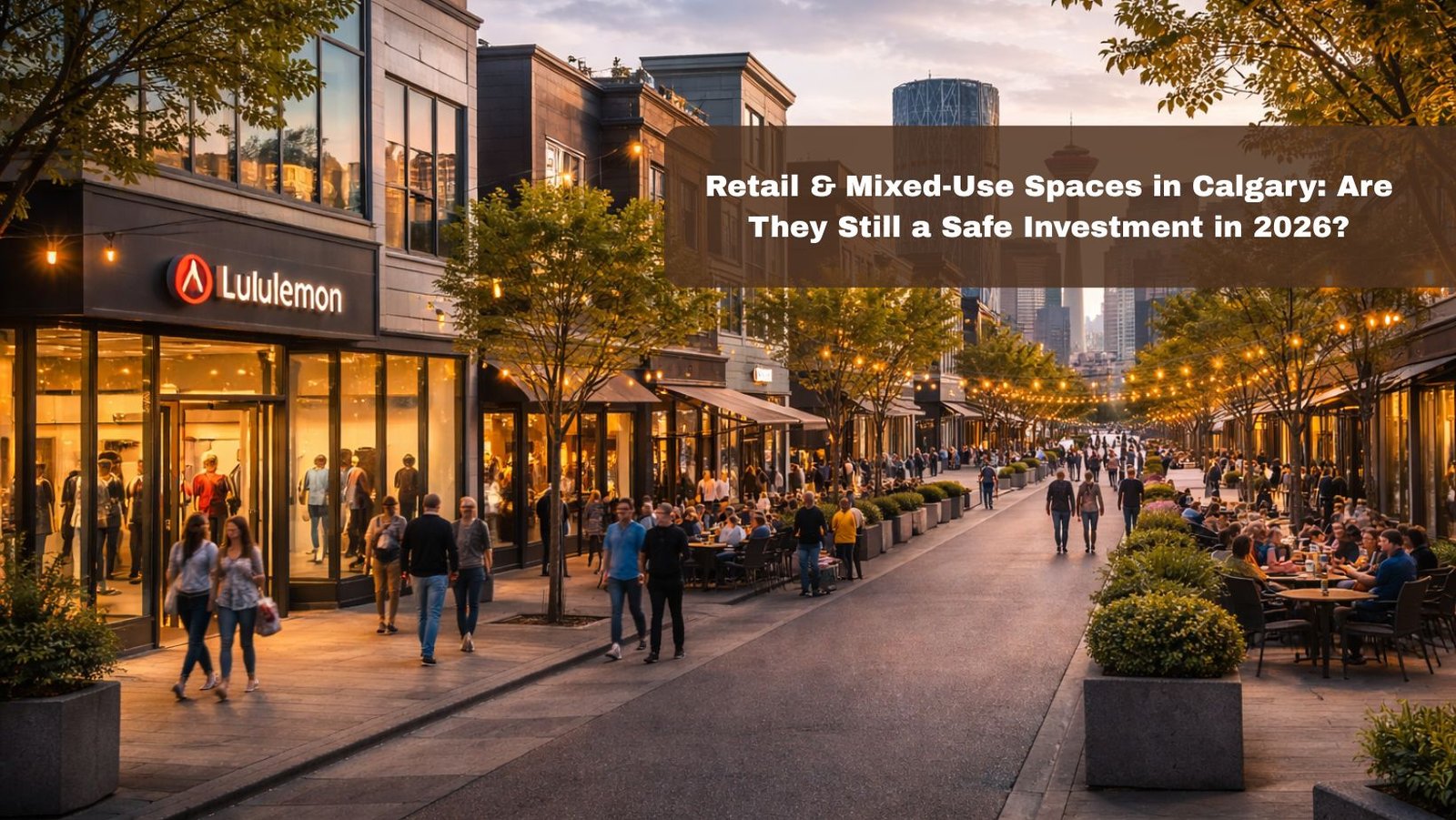
In Calgary, mixed-use spaces often include ground-floor retail with condos or rental apartments above. These developments aim to create walkable, convenient communities where people can live, work, and shop in one area.
This model has become more important as the city focuses on smarter growth and less urban sprawl.
How Calgary’s Retail Market Has Changed
Traditional retail has faced pressure, especially large standalone stores and older shopping plazas. Many people now shop online for basic goods, reducing foot traffic in certain areas.
However, retail has not disappeared-it has evolved. Service-based businesses such as restaurants, medical clinics, fitness studios, salons, and specialty food stores continue to perform well. These businesses cannot be replaced easily by online alternatives.
In Calgary, retail that serves daily needs and experiences has proven far more resilient than retail that relies only on discretionary spending.
Why Mixed-Use Spaces Are Still Attractive in 2026
Mixed-use continues to be one of Calgary’s hottest real estate sectors. One major reason is the built-in demand. Residents who live above or beside retail establishments create a steady stream of customers for the businesses below.
These properties also spread risk. And even if retail demand slows, the residential units can continue to provide steady rental income. This equilibrium makes mixed-use buildings more resilient to economic flows.
Another advantage is lifestyle appeal. Indeed, many buyers and renters seek neighborhoods where they can walk to shops, cafes , and services. This sustains strong demand and lower vacancy rates than single-use retail properties.
Location Matters More Than Ever
There’s one key factor that dictates whether retail and mixed-use spaces are still a good investment in 2026: location. Locations within walking distance of transit lines, dense residential development, and employment centers fare much better than those with a car-dependent or low-traffic layout.
Areas bordering Downtown and long-established inner-city communities are the kinds of places where there’s continual foot traffic. Newer suburban mixed-use centers can also do well when rising populations and strong transit access anchor them.
Retail properties in areas that are declining or oversupplied might look appealing but pose greater risk, regardless of price.
The Role of Transit and Density
Calgary continues to support higher-density development near transit corridors. Retail and mixed-use spaces in these areas benefit from strong daily foot traffic.
Transit-oriented developments encourage residents to rely less on cars, which increases foot traffic for nearby businesses. This is a major advantage for ground-floor retail.
Higher density also means more customers living nearby, which supports long-term tenant stability and rental income.
Risks Investors Should Be Aware Of
While opportunities exist, retail and mixed-use investments are not risk-free. Poor tenant selection is one of the biggest challenges. A property filled with non-essential or short-term businesses may struggle during economic slowdowns.
Construction costs and interest rates can also affect returns, especially for new developments. Investors should ensure rental income realistically supports financing costs.
Another risk is an outdated design. Retail spaces that lack flexibility, visibility, or modern layouts are harder to lease. In 2026, adaptability is critical.
What Makes a Retail or Mixed-Use Property “Safe” Today
There are a few common elements of safe investments. The first is that they are in areas with robust population growth or steady demand. Second, they are anchored by corporate or experiential tenants rather than straight discretionary retail.
Third, winning properties are designed for agility. Over time, tenants are drawn to spaces that can be easily reconfigured.
Finally, strong management of properties is a major factor. “The class of the building and proactive leasing strategy- those that are maintained well are performing better than those that aren’t.”
Long-Term Outlook for Calgary Investors
The local retail and mixed-use space in Calgary could still be relevant. The city’s preference for infill development, public transit accessibility, and walkable neighborhoods underpins this asset class.
Though the future of traditional retail may be less than radiant, mixed-use properties align with how people want to live in 2026. They provide convenience, community, and resilience.
Investors who embrace such changes without relying on the age-old retail model are better off in terms of consistency.
Conclusion
Calgary retail and mixed-use can still be a safe bet in 2026—but only if you choose wisely. The market’s shifted, no longer the volume-it’s all about quality, and success takes leadership and a strong foundation.
Assets that feature a mix of residential density, transit access, and service-focused retail are doing well. Those who are attached to outmoded retail concepts are in greater doubt.
There are still attractive and relevant opportunities in retail or mixed-use real estate for investors who are willing to zero in on location, tenant mix, and long-term demand as Calgary’s property market continues to evolve.