
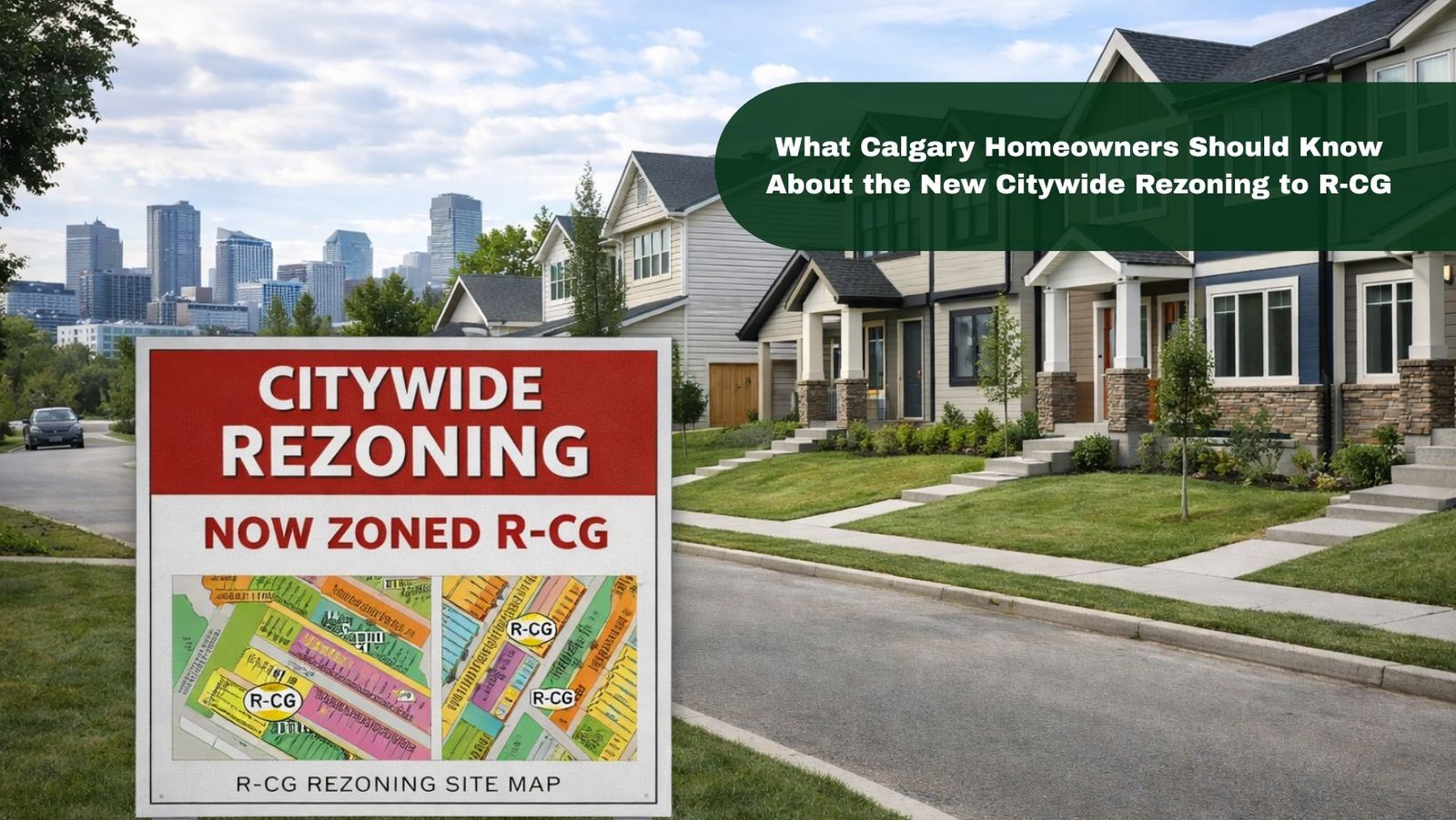
What Calgary Homeowners Should Know About the New Citywide Rezoning to R-CG
Apr 9, 2026
- 0
Introduction
In 2026, the city of Calgary introduced one of the biggest changes in planning history with a city-wide rezoning project called R-CG. This rezoning has a direct impact on residential neighborhoods in the city and all property owners, including buyers, sellers, and investors. The goal of the rezoning project is to provide more housing options and allow for more flexible development opportunities in neighborhoods that were only suitable for single-family detached homes in the past.
For most homeowners, the term R-CG may be unfamiliar, but the impact is very real. Knowing what R-CG means can help homeowners make informed decisions about their properties.
What Is R-CG Zoning
R-CG is short for Residential Grade Oriented Infill. It is a type of zoning that permits a broader range of low-density residential types on residential lots. Before the zoning, many residential areas were only allowed to have single-family detached homes or semi-detached homes in limited numbers.
Through the rezoning of R-CG in the city, residents are now allowed to build duplexes, row houses, and, in some instances, secondary suites or backyard suites on lots that were not previously allowed. The aim is to achieve what is called gentle density in the neighborhood, which is a higher density of homes without high-rise buildings.
Why Calgary Introduced Citywide Rezoning
Calgary has been experiencing significant growth in population. On the other hand, housing affordability has emerged as a concern. This is due to the lack of housing supply to meet the growing demand.
The rezoning of Calgary to R-CG rezoning is part of the housing plan to meet the challenges. Calgary is trying to spread growth by allowing various types of housing in the city instead of focusing on specific locations.
Raising the number of units that can be developed on existing land helps to increase supply. This can help to ease the pressure on prices in the future and create more entry-level ownership.
How R-CG Rezoning Affects Homeowners
For those who are already homeowners, R-CG rezoning brings new opportunities. A piece of land that could only accommodate one detached house before can now be developed to accommodate multiple units. This brings more flexibility to land use and may even increase the value of the land in some areas.
Homeowners who are planning to sell their properties may see an increase in the number of people interested in buying their property, especially from developers who are interested in redeveloping the land. Land in prime locations near public transportation, schools, and business districts may be in high demand.
For those homeowners who decide not to sell but to stay in their properties, the rezoning gives them the opportunity to develop a secondary suite or a backyard suite, depending on the guidelines imposed by the city. This will allow families to stay in their communities while also earning money from the rental suite.
What It Means for Property Values
Offices rezoning the entire city does not necessarily raise property value, but it may affect market perception. If the land has the potential for higher density, the developer may consider it more valuable for redevelopment.
In already developed areas with high demand, properties zoned R-CG may attract more buyers interested in constructing duplexes or row houses. This may drive up the value of lots, especially in the inner city.
But not all properties will be affected equally. It is up to the homeowner to determine the impact on their area before making any decisions.
Impact on Neighborhood Character
One of the concerns of the residents is whether rezoning the city will result in a drastic change in the character of the neighborhoods. The R-CG classification is intended to encourage low-rise and ground-oriented development instead of high-density towers.
Row houses and duplexes are usually restricted in terms of height and scale to match the existing homes. The aim is to achieve a gradual density instead of a drastic change. Eventually, the neighborhoods will experience more housing variety, but the residential character will be retained.
Infrastructure planning is also involved. The city takes into consideration the proximity to transit, schools, and services in supporting density to ensure that the communities remain functional and livable.
Opportunities for Investors and Builders
For investors and small-scale developers, the R-CG rezoning brings new opportunities. Some lots were only good for one dwelling unit, but now they can be used for multi-unit projects. This will improve the viability of projects and give better returns.
Developers can focus on building duplexes or row houses that will appeal to first-time buyers who are looking for more affordable alternatives to single-family homes. Small-scale infill projects can fill the gap between single-family homes and apartment complexes.
Long-Term Housing Market Effects
The citywide rezoning of R-CG is a long-term plan rather than a short-term fix. The increase in density is intended to support the housing market over the next ten years.
A more varied range of housing may help stabilize price increases by providing alternatives at various price levels. This includes entry-level ownership units and smaller family homes in established neighborhoods.
Conclusion
The rezoning to R-CG is a significant change in the use of residential land in Calgary. The rezoning allows for duplexes, row houses, and secondary suites in many neighborhoods, which will provide more housing and make it more affordable in the long run.
This rezoning is an opportunity for homeowners to redevelop their properties in a different way. It is also an opportunity for homeowners to earn rental income. For buyers, it is an opportunity to purchase a different type of housing. It is important to understand the zoning of R-CG in relation to your property.