
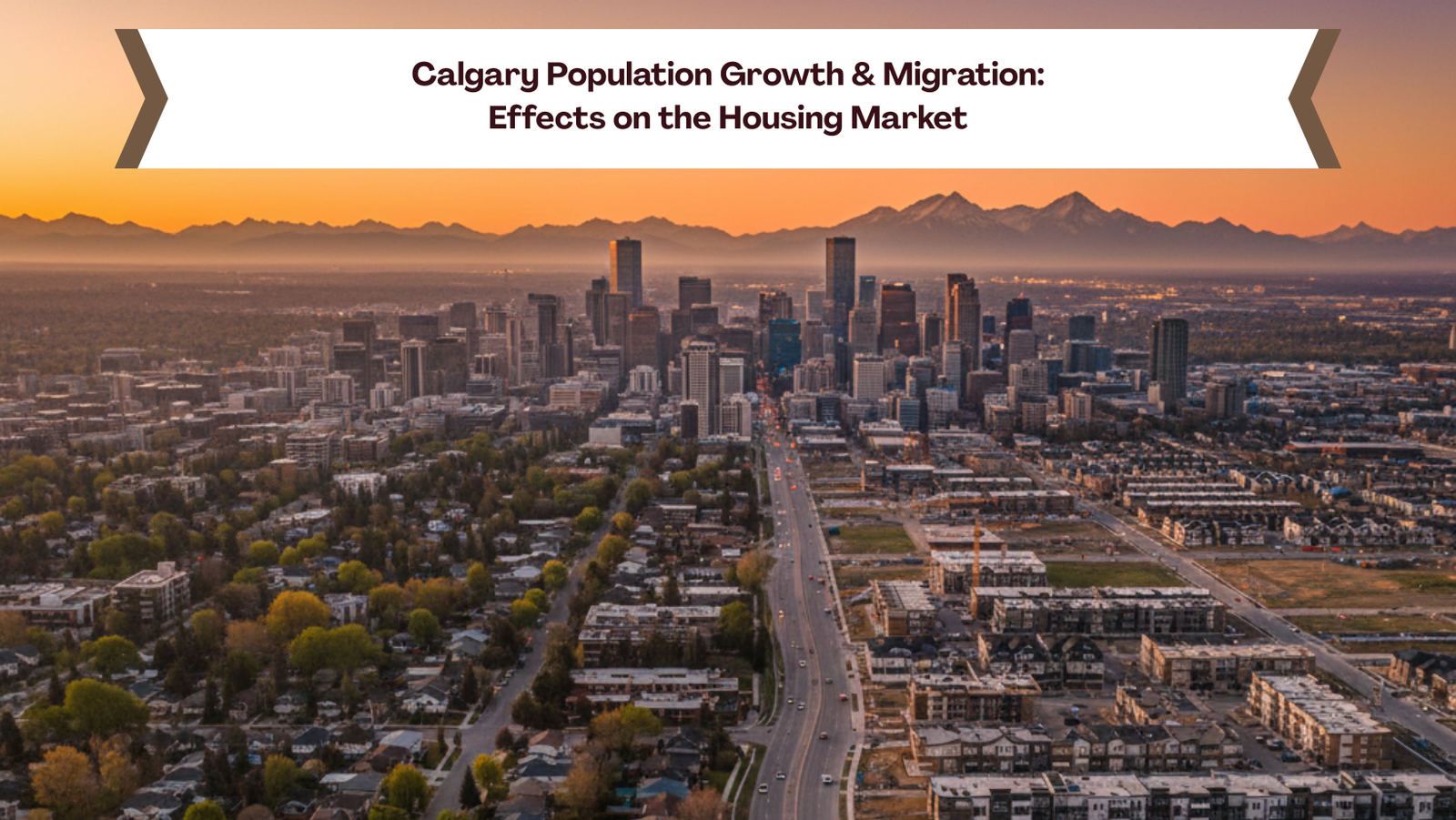
Calgary Population Growth & Migration: Effects on the Housing Market
Jan 22, 2026
- 0
Is Calgary growing faster than its homes can keep up with?
If you have felt like “For Sale” signs vanish overnight, rental listings feel tighter than rush hour on Deerfoot Trail, or dinner conversations keep circling back to “everyone seems to be moving here,” you are not imagining things. Calgary is in the middle of a population and migration moment that is reshaping how, where, and why people buy homes. By the time you finish this blog, you will understand exactly how population growth and migration are affecting Calgary’s housing market, what it means for buyers and sellers, and how to make smarter real estate decisions in a city that is evolving in real time.
Understanding Calgary Population Growth 2025
Calgary has always had growth spurts tied to opportunity. Oil booms, tech waves, and affordability cycles have pulled people in like a magnet. What feels different now is the pace and diversity of that growth.
Population growth is not just a statistic buried in a government report. It shows up in everyday life. More kids in playgrounds. Longer lines at brunch spots. New communities popping up where open land used to be. As we move through Calgary population growth 2025, the city is welcoming people from across Canada and beyond, all bringing different housing needs with them.
What is driving this growth?
- Strong job creation across multiple sectors
- Comparatively affordable housing versus Toronto and Vancouver
- Lifestyle appeal, from the Rockies to urban river pathways
- A reputation for resilience and opportunity
Calgary is no longer just a “move here for oil and gas” city. It is a place where young professionals, growing families, entrepreneurs, and retirees all see a future.
Calgary’s Migration Story: More Than Just Numbers
Calgary Migration Trends Explained
Migration is not a single stream. It is a collection of stories. Some people arrive with moving trucks and big plans. Others come with suitcases and a “let’s see how this goes” mindset.
Together, these stories form the backbone of current Calgary migration trends.
There are two main types shaping the market right now:
- Interprovincial migration, especially from Ontario and British Columbia
- International migration, including students, skilled workers, and families
Each group impacts housing differently, which is why understanding who is moving matters as much as how many are moving.
The Power of Calgary Interprovincial Migration
If there is one phrase that keeps coming up in conversations with clients, it is this: “We just couldn’t afford it back home anymore.” That sentence sums up much of Calgary interprovincial migration.
People relocating from provinces with higher housing costs are often arriving with equity. This has several ripple effects:
- Increased competition for detached homes
- Faster decision-making by buyers
- Strong interest in family-friendly neighbourhoods
- Willingness to renovate or upgrade quickly
These buyers often compare Calgary prices to what they sold for elsewhere, and suddenly a home that feels expensive locally still looks like a bargain to them. This mindset has quietly but firmly pushed prices upward in certain segments.
How Migration Fuels Calgary Housing Demand
Demand Is Not Just About Quantity
Housing demand is not simply “more people equals more houses.” It is about what kind of homes people want and where they want them.
Current Calgary housing demand shows strong interest in:
- Detached and semi-detached homes in established neighbourhoods
- Townhomes and duplexes near transit and amenities
- Rental properties for newcomers testing the waters
- Homes with space for remote work
The work-from-home shift has added an extra layer. Buyers are prioritizing home offices, finished basements, and flexible layouts. Migration has amplified this trend, especially among professionals arriving from larger cities.
Calgary’s Rental Market Under Pressure
While homeownership gets most of the headlines, the rental market tells an equally important story. Many newcomers rent first. They want to understand neighbourhoods, commutes, and schools before buying.
This has led to:
- Lower vacancy rates
- Rising rents across multiple property types
- Increased interest from real estate investors
- More competition for well-maintained units
For renters, this can feel stressful. For investors, it presents opportunity. For the city, it signals a need for balanced housing development.
The Neighbourhood Effect: Where Growth Hits Hardest
Not all parts of Calgary experience growth the same way. Migration patterns tend to concentrate demand in specific areas.
Some common themes I see as a local real estate professional:
- Inner-city communities attract young professionals and downsizers
- Suburban communities appeal to families arriving from out of province
- Transit-oriented areas draw renters and first-time buyers
- Newer developments attract those seeking modern layouts and energy efficiency
Calgary’s geography plays a role here too. Proximity to downtown, access to major roadways, and lifestyle amenities all influence where demand lands.
Supply vs Demand: The Housing Squeeze
Here is the tension at the heart of the market. While population growth and migration increase demand, housing supply does not always move at the same speed.
Why?
- Construction timelines are long
- Labour and material costs remain high
- Zoning and approval processes take time
- Infrastructure needs must be met
When demand outpaces supply, prices rise. It is not personal. It is math. This dynamic has been especially visible during periods of strong Calgary population growth 2025 projections.
What This Means for Buyers
Buying in a growth-driven market can feel overwhelming, but clarity changes everything.
If you are a buyer, here is what matters most:
- Preparation beats panic
- Understanding neighbourhood value is key
- Flexibility can save money and stress
- Timing matters, but strategy matters more
I often tell buyers that this is not about “winning” a bidding war. It is about making a smart, sustainable decision that fits your life. Calgary still offers value, but it rewards informed buyers.
What This Means for Sellers
For sellers, population growth and migration have shifted the balance in your favour, but only if you approach it correctly.
Strong demand does not eliminate the need for:
- Proper pricing
- Strategic marketing
- Professional presentation
- Realistic expectations
Homes that are priced and prepared well often attract serious interest quickly. Homes that miss the mark can still sit, even in a busy market. Growth amplifies both success and mistakes.
A Human Moment: Real Stories From the Market
One of my clients recently moved from Vancouver. They told me their Calgary home cost less than their old condo, and came with a yard, a garage, and room for their dog to finally run. Another family arrived from Ontario, initially planning to rent for a year. Six months later, they were buying, because Calgary felt like home sooner than expected.
These are not isolated stories. They are the living, breathing side of Calgary migration trends.
Calgary’s Cultural Pull
Calgary’s appeal is not just financial. It is cultural. The city balances ambition with approachability. People still say hello on walking paths. Neighbours chat. The Stampede spirit of community and resilience still hums beneath the skyline.
Migration brings new perspectives, cuisines, traditions, and energy. That cultural layering makes the city more dynamic, and it influences housing preferences too. People are not just buying homes. They are buying into a lifestyle.
Looking Ahead: What the Future Holds
As we look forward, several factors will shape the next phase of Calgary’s housing market:
- Continued interprovincial migration
- Infrastructure expansion
- Policy decisions around housing supply
- Economic diversification
If Calgary population growth 2025 stays on its current trajectory, housing demand will remain strong. The question is not whether the market will change, but how prepared you are to move with it.
Smart Moves in a Growing City
Whether you are buying, selling, investing, or simply watching the market, knowledge is your greatest asset.
Here are a few grounded takeaways:
- Growth creates opportunity, but also competition
- Migration reshapes neighbourhood dynamics
- Demand favours well-positioned properties
- Local expertise makes a measurable difference
Real estate is never just about numbers. It is about timing, emotion, goals, and context.
Calgary’s story right now is one of momentum. Population growth and migration are not abstract trends. They are shaping streets, schools, and kitchen tables across the city. Understanding how Calgary housing demand connects to Calgary interprovincial migration gives you clarity in a market that can otherwise feel noisy.
If you are thinking about making a move in or around Calgary, my advice is simple. Stay informed. Stay flexible. And work with a top rated Calgary Real Estate agent who understands not just the data, but the human stories behind it.
Because in a growing city, the smartest decisions are the ones grounded in both insight and empathy.