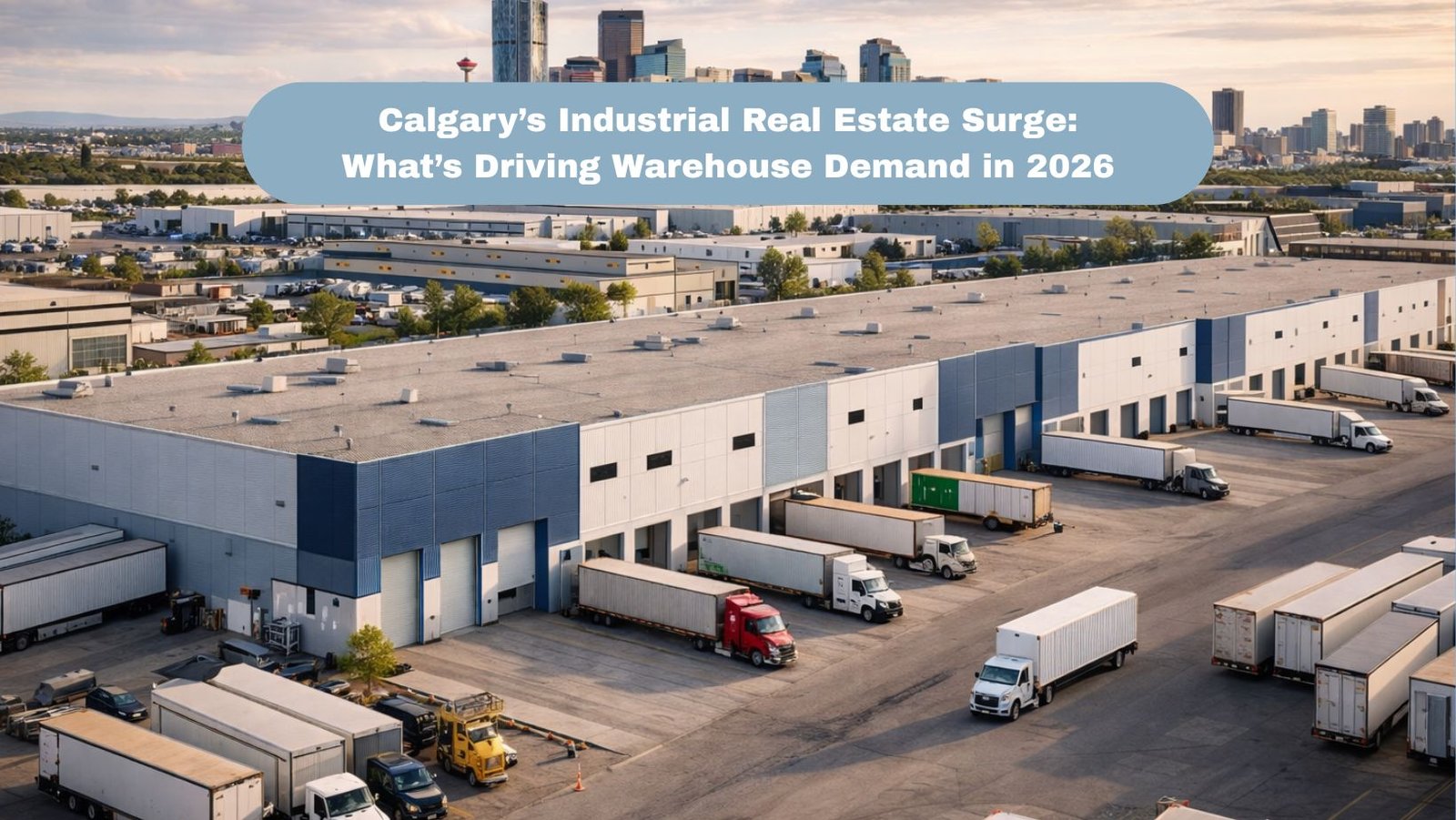

Calgary’s Industrial Real Estate Surge: What’s Driving Warehouse Demand in 2026

Introduction

Calgary’s industrial real estate market is seeing a substantial increase in 2026, including in warehouse and logistics space. Industrial Market Steady. Farmers were keen to return to the field for spring planting after a mild winter, and producers were looking forward to shipping their crops in anticipation of new trade flows. This boom is neither a short-term blip nor the result of some hot new thing coming around — it reflects structural changes in how things are moved, where businesses want to be, and what tenants need from industrial properties. Knowing the underpinnings behind these projections provides an essential perspective for developers, investors, and companies considering leasing or constructing space in 2026.

Strong Fundamentals: Demand, Vacancy Trends, and Limited Supply

One of the clearest examples of this can be seen in how vacancy and absorption are playing out in Calgary’s industrial real estate. Following a mid-cycle slowdown, the industrial market has picked back up, with elevated net absorption and falling vacancy through year-end 2025 and into 2026. Recent market analysis indicates tightening overall vacancy and positive absorption, signaling a firm re-engagement of demand in a sector that had been normalizing from historical low vacancy conditions.

One primary reason for that snapback: constrained new supply. Total industrial space under construction is still below long-term averages, and even slight upticks in tenant demand could fill what’s available. These compressed pipelines create more competitive conditions and upward pressure on rents for quality facilities.

However, despite being in “a bit of a rut,” because Calgary’s industrial market has traditionally operated at low vacancy rates — often leading other cities across the country — this current direction is influenced not only by cyclical factors but also by structural opportunities. Businesses are in the market for secure space, particularly for distribution and logistics, and the limited new construction of industrial warehouses adds to competitive pressure.

E-Commerce, Logistics, and Regional Growth

A leading driver of demand for warehouse space across North America has been the rise of e-commerce and logistics, and Calgary is no different. While national and global retail dynamics are ever-shifting, the fundamental requirement for somewhere to store, sort, and shuffle goods remains strong. Its strong industrial market is supported by its ideal location for distribution, as its proximity to major highways, rail networks, and an international airport makes it the prime distribution point in Western Canada.

With the increasing prevalence of omnichannel retailing, short lead-time distribution is a competitive point of difference. Businesses are increasingly looking to locate warehouse space in or around cities to serve last-mile delivery efficiently. Despite struggles with warehouse development, such as automated-fulfillment partnerships, demand for industrial logistics space continues to grow in Calgary submarkets.

This development is also evident in the increasing size of mid-size and small-bay industrial requirements — spaces generally up to 50,000 square feet. These facilities serve uses well beyond the typical large-bay distributor, such as light manufacturing, contractors, and regional supply chains whose needs center on accessibility and ease of operation.

Economic Drivers and Sector Diversification

A range of economic vitality also provides fuel for demand for industrial real estate in Calgary. Energy has long played a central role in Alberta’s financial identity, but broader commercial activity — industries such as logistics, manufacturing, and agriculture — is increasingly driving demand for space. Industrial space use has been enjoying tailwinds, specifically lower interest rates and favorable economic conditions, which have driven tenant expansion and incremental leasing.

Calgary’s industrial sector performs better than other, more susceptible commercial sectors when the economy is uncertain. Office markets, for instance, are still adapting to hybrid work and increased vacancies, even as industrial leasing has remained relatively stable. This relative strength is attracting investment and preserving property values in industrial niches linked to real economic activity rather than speculative demand.

Demand is also underpinned by owner-users — companies looking to buy rather than lease warehouse space. Owner-users frequently seek industrial facilities as their permanent place of business, looking to own the facility and secure a steady revenue stream rather than renewing short-term leases. Nowhere is this more evident than in smaller to mid-sized developments where owner-occupiers make up a large percentage of the block.

Strategic Location and Infrastructure Advantage

Geographically speaking, Calgary doesn’t get enough love. With the intersection of major transportation routes, the city offers excellent access to Alberta’s energy centre and beyond to British Columbia and Saskatchewan. National and international marketplaces are accessible via major highways, including the Trans-Canada and QEII, and via air and rail logistics.

When it comes to industrial users, we often see a focus on locations that maximise transit times and minimise distribution costs. Calgary’s infrastructure eliminates supply chain barriers and creates an alternative to more saturated industrial markets. This competitive position incentivises companies to establish or expand warehouse operations in and around the city, leading to, for example, substantial leasing velocity and investment appetite.

Investment Appeal and Long-Term Outlook

In an investment context, Calgary industrial real estate offers a mix of resiliency, strong fundamentals, and diversification. Although the overall Canadian market shows regional differences, Calgary is again on everybody’s radar due to a supply‑demand equilibrium in the industrial sector that remains relatively tight. Both institutional and private investors consider industrial properties crucial to their portfolios amid ongoing shifts in the economy.

Looking ahead through 2026, Calgary’s industrial profile is poised to continue its upward trend. With vacancy rates expected to tighten and tenant demand competing with limited construction for new space, rental rates could see some upward pressure. Those who look at high location warehouse properties — especially in a few key industrial submarkets — will see continued interest and perhaps even rent growth.

Conclusion

A surge of downtown Calgary industrial real estate in 2026 is propelled by a perfect storm of locational strategic advantages, resilient demand for logistics and e-commerce needs, tight new supply, and diversified economic momentum.” Both locally and nationally, while specific segments of the commercial real estate industry are grappling with transitional market dynamics, industrial real estate, including warehouse and distribution space, remains robust and continues to attract competitors.

For tenants, investors, and developers in Calgary’s warehouse market circa 2026, that means wading into a sector driven by sound fundamentals, long-term demand drivers, and limited surpluses relative to demand. As the market changes, taking the pulse of these foundational forces and their implications will be critical for making choices that capitalize on both short-term breaks and long-term trends.


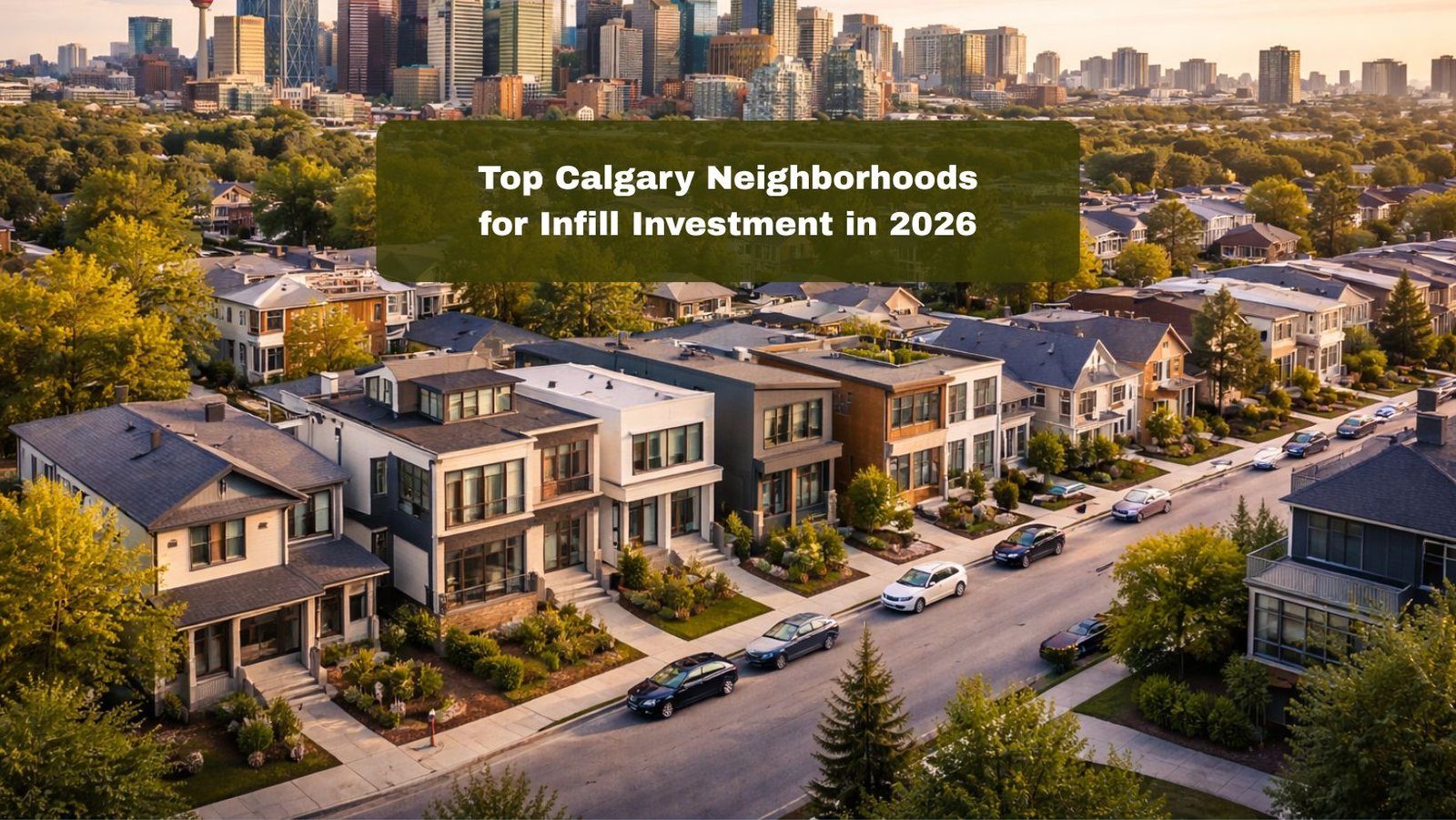
Top Calgary Neighborhoods for Infill Investment in 2026

Still a top investment theme, infill development is one of the most attractive in Calgary real estate for 2026. With an increasing emphasis across planning and zoning regimes on low-density development in mature urban areas, specific neighbourhoods continue to outperform others in terms of redevelopment activity, investor appeal, and the long-term value proposition. Whether you’re thinking about constructing an infill home, redeveloping a lot, or buying an existing infill product, these Calgary communities qualify as top-sitting strategic infill investment opportunities this year.

Read below for a breakdown of the most promising neighborhoods with heavy infill activity, favorable development support, and clear investment potential.

1. Altadore – Southwest Inner-City Strength

Altadore is one of the city’s best infill investment areas in Calgary. Other great features of this community are its proximity to amenities in Marda Loop, its green spaces such as River Park, and its established inner-city character – all of which make it an attractive place for developers and owner-occupiers. New infills continue to sprout in the area, among its original bungalows and other aged homes, with both semi-detached houses and modern single-family homes under construction. Location, lifestyle, and walkability have driven strong buyer demand in the area, encouraging continued redevelopment and strong value retention.

Altadore, if you are looking for infill investment in 2026, pay close attention to Altadore , as there is consistent interest in the redevelopment market with good resale and absorption, and it is not as oversupplied as the broader Calgary infill market.

2. Killarney-Glengarry – Balanced Demand and Redevelopment

Killarney-Glengarry, located a bit north west of downtown, is perennially popular with infill builders. Its mix of aging residential stock, transit options, and amenity-richness — walking distance to gangbuster shopping, schools, and recreation — makes it well-suited for infill redevelopment. Oversized lots and a strategic location enable infill developers to create duplexes, townhomes, or modern single-family replacements that attract both families and investors.

It’s this blend of affordability and redevelopment potential that Killarney-Glengarry has over some other inner-city pockets — a sweet spot toggling between value today and the potential for capital growth down the road in 2026.

3. Ramsay – Southeast Inner City with Deep Lots

Ramsay is another inner-city neighbourhood where infill investment is gaining traction. Located southeast of downtown and adjacent to natural features like the Elbow River, this community offers larger, deeper lot dimensions than many inner-city districts. These lots make it easier to design and construct multi-unit infill projects, including duplexes and larger modern homes with flexible layouts.

Proximity to Inglewood’s business areas, trails, and local amenities — combined with the appeal of a riverside community — enhances Ramsay’s infill investment credentials. In 2026, builders and buyers alike value Ramsay for its blend of location and redevelopment feasibility.

4. Mount Pleasant & Hillhurst/West Hillhurst – Classic Urban Potential

Inner-city neighbourhoods in Calgary, such as Mount Pleasant and Hillhurst/West Hillhurst, appeal to buyers for their continued demand and established residential character. Their proximity to the city centre, plus parks, cafes, and transit, makes these neighbourhoods ripe for infill redevelopment. According to market analysis, these communities top many lists as Calgary’s most desirable inner-city neighbourhoods for new builds.

From a land use standpoint, these ‘hoods typically permit infill compatible zoning that makes sense for duplex and modern home projects that fit the bill for urban living without condominium-density. Thoughtful infill can create a strong resale story and drive rental demand if owners decide to rent.

5. Bridgeland & Mission – Urban Lifestyle Meets Infill Demand

Unique to Bridgeland, it offers a combination of amenities and interests for redevelopment or lifestyle. These city centre neighbourhoods appeal to buyers who want walkable shops, restaurants, green space, and good transit connections. That lifestyle demand trickles down into infill opportunities, where investors and developers are snapping up older lots to convert them into new construction that embodies the area’s effervescent urban vibe.

Bridgeland as a whole is condo-pivoting, but planning drawings for all the sensitive infill, particularly row-house development, are celebrated alongside larger apartment pyramids. Mission sits near the 17th Avenue corridor — and is being served by its continued redevelopment, which bodes well for infill growth in 2026.

Additional Calgary Infill Areas to Watch

In addition to the known hot spots listed above, here are a few other locations downtown that merit watching:

Capitol Hill & Renfrew – Older Northwest neighbourhoods with good infill opportunities and decent access to parks and transit.

Briar Hill & Rosedale – At this level, there is development upside with larger lot sizes and emerging infill interest.

Beltline & Kensington: Both are transit-oriented communities where mid-size infill and townhomes, and redevelopment, are the norm; those who want the urban lifestyle still love this.

These zones have a lot going for them: proximity to downtown, lifestyle amenities, and lax zoning that favors incremental density over large-scale high-rises.

Conclusion

Infill activity in Calgary remains concentrated in inner-city locations, which offer strong fundamentals, redevelopment opportunities, and sustained buyer demand. In 2026, while others like Altadore, Killarney-Glengarry, Ramsay, Hillhurst/West Hillhurst, Mount Pleasant, and Bridgeland stand out as strategic targets for investors and developers. An understanding of each community’s individual charm, zoning context, and buyer marketability is crucial when planning your investment for long-term returns from Calgary’s infill bloom.


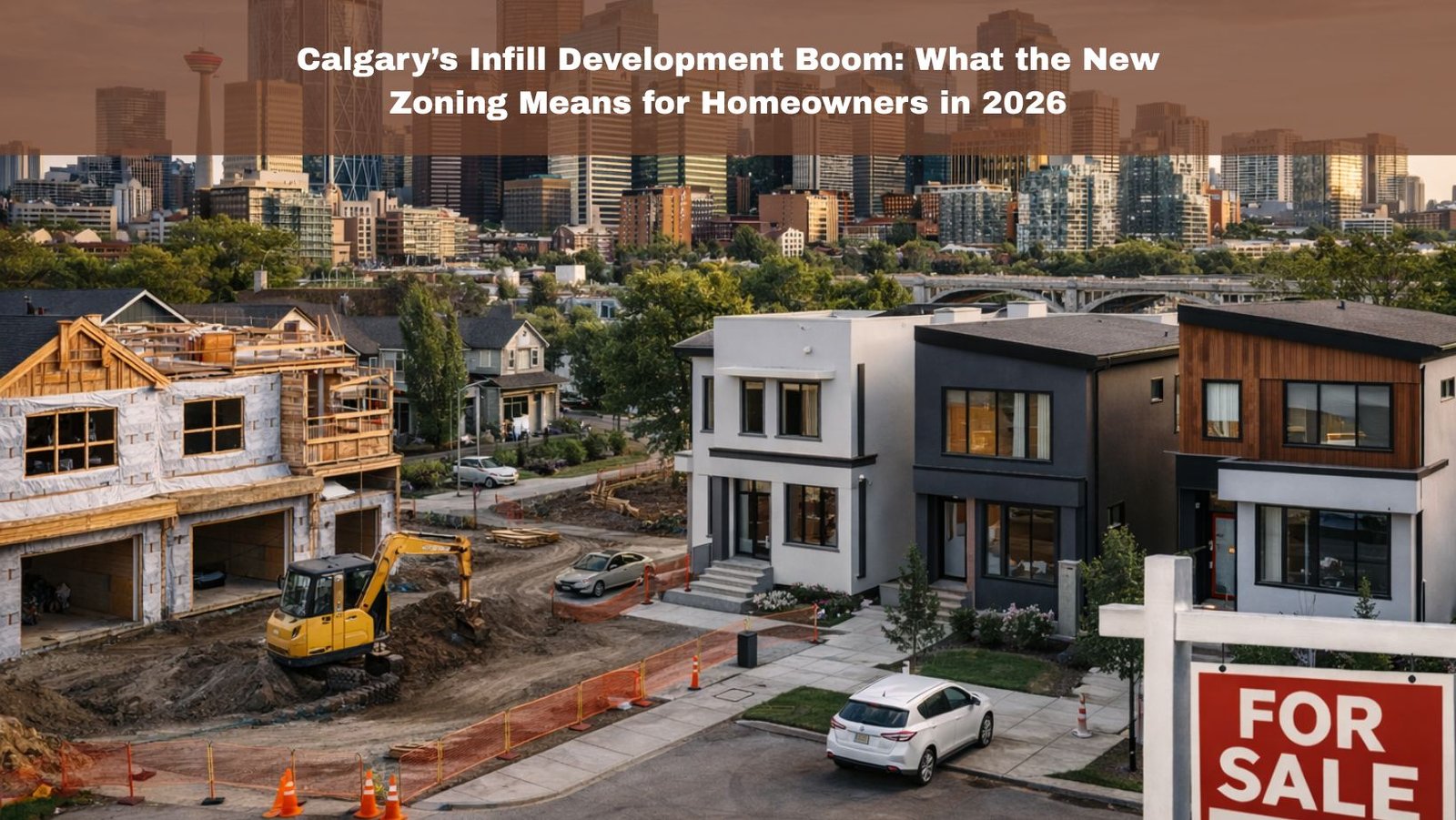
Calgary’s Infill Development Boom: What the New Zoning Means for Homeowners in 2026

Introduction

Now, in 2026, infill development has evolved from a planning idea of what could be to an unstoppable transformation in Calgary’s inner-city communities. The maturity of the community population and shortage of urban land have also been contributing factors when coupled with zoning changes to promote redevelopment. For homeowners, that means opportunity and uncertainty. The spread of duplexes, row houses, and small multi-unit buildings is remaking streetscapes long characterized by single-family homes, raising vital questions about property values, lifestyles, and long-term planning.

In Calgary, infill isn’t just confined to a few areas anymore. It is now a city-wide endeavor to increase the supply of housing, make it more affordable, and better utilize existing cash underpinnings. What the new zoning framework allows, and how it affects homeowners, is worth knowing as you navigate Calgary’s changing residential landscape in 2026.

What Changed: Understanding Calgary’s New Zoning Direction

Calgary’s revised zoning approach reflects an overall shift toward low-density development, with a focus on reducing high-rise concentration. Instead of focusing solely on towers in the downtown core, the city has been encouraging a more flexible residential zoning for neighborhoods that are already developed. That will include more widespread permissions for duplexes, secondary suites, townhomes, and small multi-unit developments on lots that previously backed only one detached home.

The purpose of these changes is strategic. Calgary can continue to grow, but growth that spreads out is expensive and infrastructure-heavy. Promoting infill allows the city to squeeze in more residents while minimizing pressure on roads, schools, utilities, and transit. From a planning perspective, this makes sense – it assists in long-term sustainability and fiscal discipline.

But zoning flexibility is creating new realities for homeowners. The property next door can be redeveloped in a way that dramatically impactsimpacts density, parking behaviour, and neighbourhood character. This is dislocating in the short term, but it creates new value streams that didn’t exist before.

Why Infill Development Is Accelerating in 2026

Several factors are converging to fuel Calgary’s infill boom. First, there has been the intensification of land scarcity in central neighbourhoods. With less and less developable land in city centers, developers are eyeing older homes on larger lots for redevelopment. These sites provide the scale to support infill construction under current zoning rules.

Second, prices to build detached homes are still high. Infill projects that yield multiple units on a single lot enhance project economics by spreading land and construction costs across multiple saleable homes. This is why infill is becoming a popular choice for developers working in land-constrained, margin-tight markets.

Third, buyer preferences are evolving. Proximity to work, amenities, and transit is more important to a large number of families than lot size. Infill housing fills this gap, providing contemporary accommodation in existing neighbourhoods—an alignment of zoning, economics, and buyer behaviour that spurred redevelopment and further momentum in 2026.

What Infill Zoning Means for Existing Homeowners

In infill-intensive home markets, zoning changes bring new opportunities — and trade-offs — for homeowners. On the opportunity side, properties eligible for redevelopment may sell at a premium. Land value becomes a larger share of the cost, especially with older homes nearing obsolescence. For owners who intend to sell, it can be more advantageous when builders are more interested than regular end users.

Homeowners who remain could benefit from the potential indirect value of increased investment in the neighborhood. It can also lead to better streetscapes, updated infrastructure , and renewed market interest. This reinvestment, in the long run, can improve the overall attractiveness of a neighborhood.

However, infill also introduces challenges. Construction may disrupt, parking strain can spike, and the long-standing character of a neighborhood can change. Privacy and noise issues are frequent problems, especially as higher-density buildings replace single-family homes. Residents of redevelopment areas are now preparing for such impacts in large numbers by 2026.

How Property Values Are Being Affected

The relationship between infill zoning and property values is complex. When zoning allows for more units and/or higher density, properties with redevelopment potential will typically outperform in price. Often, these homes are priced based on land potential rather than livability.

On the other hand, adjacent properties with aggressive infill can go either way. Some buyers want the new development and density, while others do not like uniformity. The quality of design, size compatibility, and neighborhood context have a significant impact on value.

Also, just because something is infill doesn’t mean it’s going to appreciate on its own. It also depends on the referring market conditions, developer demand, and the specifics of the zoning. Homeowners in 2026 will need to know the zoning of their lot and what is really a redevelopment of it, instead of counting on an accretionary value free for the taking.

Living Beside Infill: Lifestyle and Community Considerations

Beyond pricing, infill development changes the experience of living in inner-city neighborhoods. Higher density can help local businesses, make transit more viable, and lead to more lively streets. This is precisely the kind of long-range urban planning goal that residents – many of them – find attractive.

At the same time, change could look abrupt. Long-time residents can see new infill as demolishing the neighbors they were once drawn to when they moved in. In 2026, it remains a defining element in Calgary’s infill story.

Involvement in the community has always been significant, but increasingly so. More informed homeowners are better equipped to engage meaningfully with change in their neighborhood, knowing zoning laws, development procedures, and appeal processes. No matter what change they bring, at least with awareness, the public is not opposing change per se, but is asking for design quality and responsible development.

What Homeowners Should Do in 2026

Zoning Classification and Redevelopment Potential: Homeowners should first understand their zoning classification and redevelopment potential. A meeting with a planner, real estate professional, or land-use expert may help untangle possible options and expectations. This understanding enables better long-term decision-making, whether the end game is to sell, redevelop, or coexist with infill.

Anyone thinking of selling should closely consider the timing. Demand from homebuilders varies depending on financing and construction costs. Timing is crucial to driving strategic success. Homeowners planning to remain, by contrast, should evaluate how infill will affect their lifestyle and make modest improvements to stay competitive as neighborhood standards rise.

Homeowners who think ahead to 2026 do better than those who wait and react. Infill is no longer theoretical; it’s now a reality that is changing the face of Calgary’s housing supply.

Conclusion

Calgary’s 2026 infill development boom reflects the city adapting to growth, affordability pressures, and land constraints. New zoning rules have unlocked opportunities for higher-density housing in established neighborhoods, accelerating redevelopment across the city. For homeowners, this shift brings increased land value potential, neighborhood reinvestment, and long-term urban vitality — alongside short-term disruption and lifestyle change.

Ultimately, infill zoning is neither inherently positive nor negative. Its impact depends on location, execution, and homeowner strategy. In 2026, those who understand Calgary’s zoning direction and engage with change thoughtfully will be best positioned to protect value, capitalize on opportunity, and navigate the city’s next phase of residential evolution with confidence.


Detached Homes in Calgary: Why They’re Holding Value Despite Market Shifts in 2026

Introduction

There’s at least one segment of Calgary’s housing market that remains remarkably resilient as we transition into a more balanced market in 2026: detached homes. Condo and townhome values are under pressure with increased inventory levels and new buyer sentiment, but detached properties have retained better value. This contrast has led buyers, sellers, and investors to question where the absolute stability now resides in the market.

Detached homes have a special place in Calgary. They’re at the confluence of tight supply, robust end-user demand, and long-term lifestyle pull. Even as the broader market cools, these fundamentals continue to support pricing and purchasing confidence. Knowing what is driving the value of detached homes speaks volumes about what is happening in the resale housing market in Calgary in 2026.

Structural Supply Constraints Continue to Support Value

That’s a market force that exerts greater downward pressure on the price of detached homes than any other factor. While multifamily product (condos and townhomes) can be delivered in similar high volumes through mid- to high-rise construction, detached housing production is constrained by land availability, zoning limitations , and infrastructure constraints. If you want to build a monster detached on an inner-city lot in Calgary , Alberta, there ain’t no more.

This structural constraint means that, despite easing demand, supply cannot expand fast enough to drive significant price drops. New detached housing supply is often in outlying suburbs, making established inner and mid-ring suburbs highly sought after. Location, lot size, and long-term appreciation are what buyers are always drawn to in these areas, helping maintain price stability.

And in 2026, this supply structure is the same. Though more listings have come on the market overall, detached inventory remains tight enough to prevent a similar oversupply as in higher-density segments.

End-User Demand Remains Strong and Consistent

The single-family homes benefit from a largely end-user demand base. Families often consider detached homes, long-time residents, and move-up buyers more as lifestyle purchases than as short-term investments. This difference is significant, especially in changing market conditions.

In a rising market, speculative demand is also the first to go. Houses are not so much in the grip of investors as at the whim of owner-occupiers who are concerned with space, privacy, schools, and stability. These preferences are less vulnerable to short-term changes in price and more consistent with long-term utility.

With affordability pressures reshaping buyer behavior in 2026, most households are sticking to homes that enhance their lifestyle rather than opening up to a marginal price variance. Single-family homes remain in line with this preference, contributing to demand despite slowing sales levels.

Price Stability Driven by Replacement Cost

Another essential reason detached houses are holding their value is their replacement cost. Building costs for single-family homes remain high owing to labor shortages, the cost and scarcity of materials, and regulations. In some cases, the cost to build a new detached home has now surpassed the price of similar resale homes.

And that is the natural price floor that has been created. When the cost of replacement is still high, Sellers are not as willing to accept extremely low offers, and Buyers realize they can purchase existing homes at a price lower than what it would cost to build new. This provides market discipline and downside protection.

Replacement cost continues to serve as a stabilizing factor for detached homes in 2026, especially in well-positioned communities where the land component of price is more significant.

Neighborhood Scarcity and Micro-Market Strength

Detached homes in Calgary are highly regional. More general trends give it context, but pricing and demand are ultimately determined at the neighborhood level. Many isolated communities still have very low turnover; generally, few homes come on the market at any given time.

With that kind of scarcity, competition even in a quieter market is inevitable. Well-maintained homes in good school districts or transit-friendly neighborhoods can draw multiple bidders, so long as prices are close to those of recent comparable sales. Because of this, detached houses in these micro-markets retain their negotiating power.

Unlike condo pricing, which tends to be uniform across similar buildings, detached homes are well served by their individuality — lot size, renovations, layout, and location all add up to create differences. This distinctiveness contributes to maintaining value and mitigates general price compression.

Seller Behavior and Market Discipline

Sentiment, on the other hand, has also helped cushion the values of detached homes. Many single-family home owners who are not selling need to tap such funds. This financial flexibility means sellers can afford to ignore lowball offers and wait for the right one.

In contrast to investor-dominated segments, detached sellers are not desperate for an urgent low-ball offer that will get them out of their position. This conscientious action has helped reduce the number of distressed or discounted sales on the market and preserve pricing benchmarks.

By 2026, this is a stabilizing behavior. Those who do have the option to sell tend not to be motivated by need but rather by lifestyle changes, which means they can price and maintain leverage when conditions permit.

Conclusion

Calgary demonstrates that detached houses hold value in 2026, not because of a speculative bubble but because of an enduring fact. Low supply, sustained end-user demand, high replacement costs, and micro-market inventories are all keeping pricing protected as the general market finds its new level.

Calgary’s housing market has shifted toward balance, but it is not a market balanced across the board. Single-family homes are the most solid category, according to agents, offering sellers predictability and buyers long-term confidence. For a year characterized by caution and recalibration, detached properties are an outlier — not every product type reacts to market movement in the same way. As Calgary property hunters in 2026, it is important to understand the difference between boom and bust so you can make a decision confidently for life, not just for a good few years.


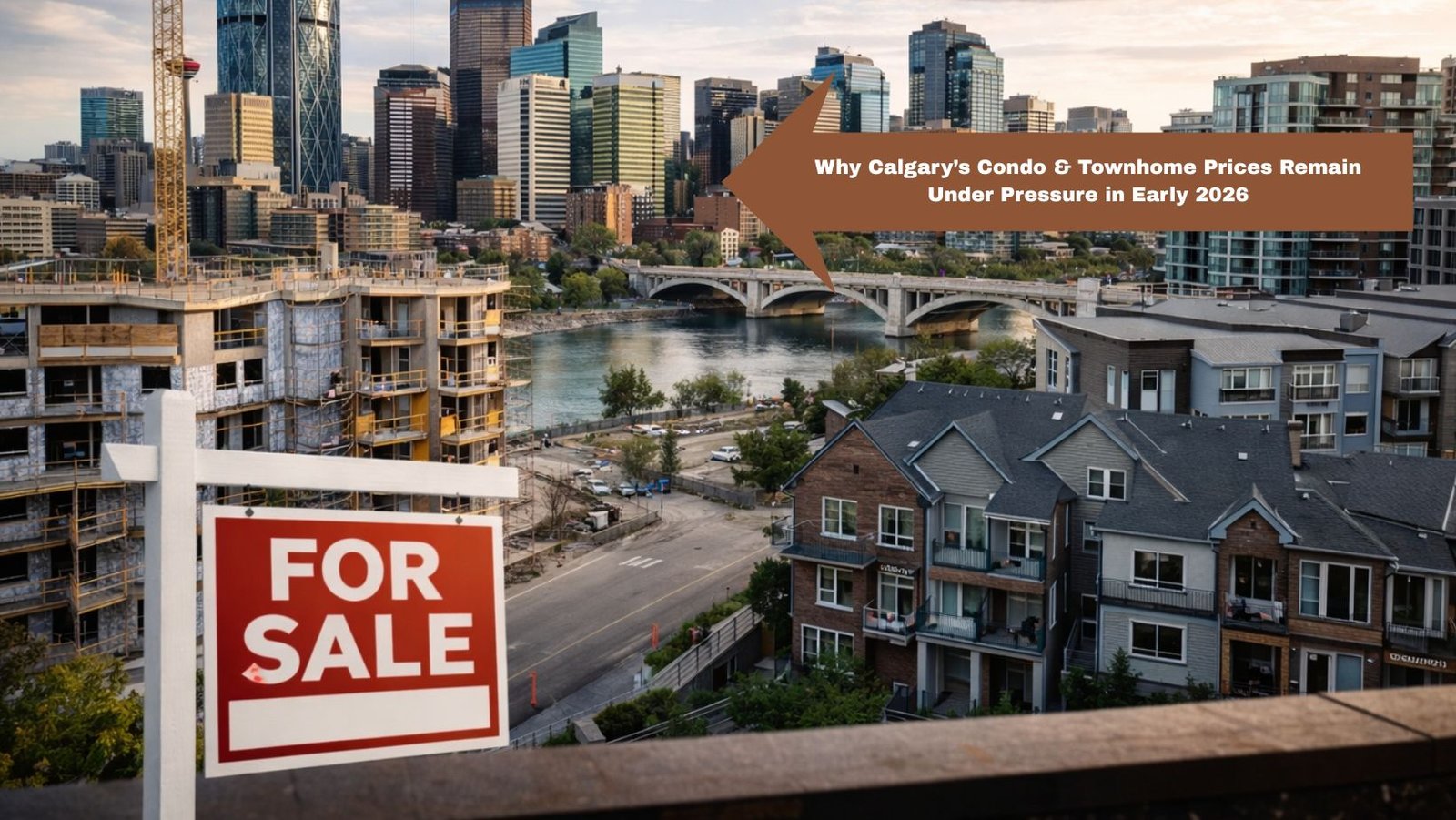
Why Calgary’s Condo & Townhome Prices Remain Under Pressure in Early 2026

Introduction

In the early months of 2026, Calgary’s real estate market seems to be a tale of two markets for different types of properties. As detached homes in vast swaths of the region have proved resilient and seen prices hold steadier, comparatively weaker conditions persist in condos and townhouses. That could give you the wrong impression about where the market is heading,” Cruvadore said. For many people in the market, that discrepancy raises an important question: Why are condos and townhomes struggling while other segments seem more balanced?

The answer is a mix of supply growth, changing buyer tastes, affordability dynamics, and shifting lifestyles. In Calgary, multi-unit dwellings (apartments and townhouses) have accounted for the majority of new inventory for several years, and that supply is testing demand levels. Insight into these forces is essential for buyers seeking value and for sellers trying to message their properties in 2026 effectively.

Elevated Supply and Slower Absorption

The primary factor influencing both condo and townhome prices is inventory. Calgary’s multifamily pipeline has been ramped up over the past few years. Buildings that were conceived and financed when it was impossible to build quickly enough have come online, adding thousands of new units.

This inflow was ahead of buyer absorption in early 2026. Condos and townhomes will always outpace new detached home production because they are not hampered by land availability or zoning restrictions. Where several similar units are put on the market at the same time, competition among them becomes sharper. Buyers have the edge, and sellers must quickly sharpen prices, conditions, or offers.

And so the months’ supply of inventory in these segments is now in territory historically conducive to price appreciation. Extended market durations and a higher rate of price reductions should be expected in those circumstances. This is not a market crash but a supply-driven adjustment.

Buyer Caution and Affordability Sensitivity

Condos and townhomes are often marketed as entry-level housing, but buyers in 2026 have more costs on their minds than in past years. Interest rates remain a concern, and even minor rate hikes are having an outsized effect on lower prices.

Condo fees, special assessments, and spiking insurance costs are also playing a bigger role in buyers’ decisions. Many buyers today consider the all-inclusive monthly cost of ownership rather than basing their decisions solely on the price they see online. In some instances, a well-priced condo may seem less desirable than a slightly more expensive townhome or a resale detached home that’s been around the block, which is cheaper to carry.

This added scrutiny impedes decision-making and reduces urgency. They’re willing to take the time to do so or to break up if it’s not clear where value alignment is going, and opting to rent changes the equation, imposing a cap on upward price movement in condos and townhomes.

Investor Pullback and Changing Demand Mix

Investor demand has been a key factor in underpinning Calgary’s condo market during previous cycles, particularly when rental demand soared. At the beginning of 2026, that support had waned. With tighter financing conditions, more conservative lending standards , and less rental growth, investor demand has been stifled.

Meanwhile, end-user demand has changed. In competitive markets, residents who would otherwise have opted for a condo or townhome now have the freedom to look elsewhere, as availability has risen and bidding pressure has eased in other areas. This shift in demand is also putting pressure on higher-density housing.

If there is no major investor activity or pressing end-user interest, price momentum naturally fizzles. For condominiums and townhouses competing on price, not on future speculation, the pricing pressure remains.

Product Differentiation and Market Saturation

The other issue in Calgary’s condo and townhome market is that everything looks the same. In many companies, apartments have similar layouts, finishes, and price points. When numerous similar listings come up, buyers flock to the best-priced or best-presented option, while the rest sit.

Market saturation magnifies this effect. Even a high-quality unit can find itself in trouble if there are overwhelming alternatives. And sellers who don’t react in a timely way (whether it’s price or presentation) often find that the longer they remain on the market, the more concessions are wrung out of their pockets.

So what we’ve got here is an environment that rewards differentiation, be it upgraded interiors, better views, good management, and transparent financials, and punishes the non-special case when it comes to average or poorly-placed listings. This dynamic is likely to continue until excess inventory is cleared.

Conclusion

Calgary’s condo and townhome prices remain under pressure in early 2026, not due to a lack of interest in urban or multifamily living, but because supply, affordability, and buyer behavior are temporarily out of alignment. Elevated inventory, cautious purchasers, reduced investor activity, and product saturation have collectively shifted leverage toward buyers.

For buyers, this presents a window of opportunity to secure value with patience and negotiation. For sellers, it underscores the importance of realistic pricing, strong presentation, and a clear understanding of current market conditions. As inventory gradually absorbs and demand stabilizes, pricing pressure may ease. Until then, condos and townhomes in Calgary will continue to reflect a market that prioritizes value, discipline, and differentiation over momentum.


Is Calgary a Balanced Market in 2026? What Buyers & Sellers Need to Know Now

Introduction

Calgary’s housing market in 2026 is starting with a very different beat than the frenetic, post-pandemic years. All those bidding wars and double-digit price increases have given way to a sense that the market has finally stopped overheating. Buyers are no longer jumping at the chance to buy a home at any price, and sellers are meeting a pickier clientele. This change has led to a central question across the industry: In 2026, is Calgary at last becoming a balanced real estate market?

The answer is nuanced. Despite improvements in headline metrics, reality on the ground is highly mixed across property type, price range, and neighborhood. Understanding what that “balanced market” really means — and how it affects decision-making — is vital for anyone hoping to buy or sell this year. In a market where momentum is flagging and strategy matters more than speed, the informed have an obvious edge.

Understanding Market Balance: What Has Changed

A market is considered balanced when neither buyers nor sellers have the upper hand. In practical terms, that often means inventory levels that give buyers sufficient options without requiring sellers to make significant concessions. To be sure, this definition is also followed in principle, although not consistently, in the Calgary market in 2026.

Active listings rose over the last year as new construction was completed and more homeowners decided to test the market. This influx of supply has taken some of the heat off a market that last year saw prices leap upwards to unsustainable levels. Buyer demand, meanwhile, has cooled. Although population growth and in-migration between provinces continue to support it, affordability constraints and economic caution have dampened enthusiasm.

The net effect is a market that seems calmer and more rational. And properties are starting to take longer to sell, negotiations have grown more evenhanded, and transactions are increasingly being driven by fundamentals, rather than fear of missing out. However, this balance is uneven. Demand for detached houses in established neighborhoods remains steady, while units, including apartments and townhouses, are seeing more sellers enter the fray. Market equilibrium in Calgary is thus best thought of as segmented, not absolute.

Pricing Trends and Inventory: Stability with Pockets of Pressure

Prices are often the clearest marker of market equilibrium. In 2026, Calgary pricing trends suggest that a stable price evolution is much more likely than a sharp decline or another spike. Detached and semi-detached houses have mostly held their value, supported by scarce land and steady demand from families and longtime owners. These segments remain places of relative scarcity, particularly in desirable neighborhoods with good amenities and transit access.

Higher-density housing, by contrast, has seen more pressure. Condominiums and row houses have experienced an increase in inventory levels relative to absorption, resulting in longer time on the market for sales to occur, and a select few resorting to price adjustments. This is not an indicator of a widespread downward trend but merely a return to atoms that are more accurately priced as they should be. Buyers in these price segments are more analytical, comparing their options thoughtfully and pushing back on properties that seem overpriced or poorly positioned.

As a whole, 2026’s price action represents a ‘healthy’ reset. Rather than significant equity gains, the market is rewarding well-priced, well-presented properties. Those who are positioned to current conditions continue to represent success, but sellers who haven’t let go of past peak prices? Not so much. This discipline is a sign of equilibrium.

What Buyers Should Know in 2026

For buyers, the Calgary market in 2026 offers a more innovative, savvier way to become an owner. More inventory equals more choice, less urgency, and better negotiating leverage. It also gives purchasers the luxury of taking time to understand neighborhoods, assess property condition, and add protective points without worrying they will be instantly overbid.

That doesn’t mean buyers have the upper hand. You get what you pay for is still a thing, and if it’s an A-quality item underneath the pile of cat puke on top of it, and you don’t jump fast enough, it’s gone. But, in general, everything tends toward preparedness over swiftness. Those with funding lined up and a good understanding of what things are worth will be well placed to get good terms.

A second benefit for buyers is the chance to focus on long-term fit rather than short-term competition. With less urgency to transact on the spot, buyers can focus on layout, location, and carrying costs. Smart buying in Calgary in 2026 has less to do with winning and more to do with picking well.

What Sellers Should Know in 2026

Sellers in a balanced market have different expectations than those in a seller’s market. Pricing accuracy has become critical. Homes listed at a premium are lingering on the market longer, and sellers may need to reduce prices to maintain negotiating power. Meanwhile, competitively priced homes are still selling efficiently, if not instantly.

More of a factor is presentation. With buyers now seeing more options, a home must pop through clean lines, staging, and professional marketing. Minor improvements and fixes may *9*+eleorexeven sway buyer opinion and the sale price at the final offer stage. Transparency and flexibility, for example, meeting inspection terms or providing fair closing timelines, are more critical than ever.

Sellers must also realize that an equilibrium market does not eliminate all opportunities. In low-supply sectors, such as detached homes in popular areas, sellers have the upper hand when pricing and positioning are done correctly. The most significant difference in 2026 is that winning depends on the strategy and execution, not just market momentum.

Conclusion

Calgary’s real estate market in 2026 is best described as selectively balanced. The era of extreme seller dominance has passed, replaced by a more measured environment where supply and demand are better aligned. This balance, however, is not universal. Detached homes and prime locations remain resilient, while higher-density housing offers greater leverage to buyers.

For buyers, the market supports thoughtful decision-making, negotiation, and long-term planning. For sellers, it demands realism, preparation, and an understanding of local conditions. Ultimately, Calgary’s 2026 housing market rewards those who adapt to its evolved dynamics. Balance does not eliminate opportunity — it simply shifts success toward informed, disciplined participants who understand that today’s market values precision over urgency.


Do you have questions?

Call or text today, we are here to help!

+1 403-483-3300