
Winterize Your Calgary Home: Fall Maintenance Tips for Energy Savings

Introduction

As the temperature gradually decreases in Calgary, homeowners need to prepare their homes to withstand the long, cold winter months. Winters in Alberta are notorious for extreme cold snaps, heavy snowfall, and chinook winds that often bring cycles of freezing and refreezing. Without proper preparation, these conditions can result in costly energy consumption, unnecessary repairs, and additional stress to your home.

Fall is the best season to winterize your home. Pre-winterization is not only good for your home but will also help reduce energy consumption, lower heating costs, and keep your family warm and cozy throughout the cold season.

Inspect and Service Your Furnace

Your furnace will be working harder than any other appliance in your house throughout a Calgary winter. Before the consistent freezing temperatures begin, arrange for a professional furnace inspection and tune-up. This will clean internal components and ensure that your furnace is running efficiently.

Change the furnace filters frequently, such as every one to three months. This will help to clean the air and lower the cost of furnace operation. In older furnaces, fall is a good time to think about the efficiency rating of your furnace. Replacing it with a high-efficiency furnace can lower your utility costs.

Seal Drafts Around Windows and Doors

One of the most common reasons for high energy consumption in winter is the loss of heat through windows and doors. Even a small opening allows cold air to leak in and warm air to leak out.

First, check the weatherstripping of all the doors opening to the outside. Replace the weatherstripping if it is cracked and worn out. Use caulking to seal all openings around the windows where there is a gap. For older windows, a solution is to use plastic insulation film.

In Calgary, drafts can definitely reduce comfort and lower energy bills. Even small improvements to air sealing can have a big effect in the long term.

Inspect and Clean Gutters

Leaves and other debris falling from the trees usually accumulate in the gutters. This hampers smooth drainage, and if the temperature falls, ice forms. Such ice dams can damage the roofs of the house and allow water to seep into the walls or ceilings of the house.

Ensure that the gutters are clean and that the water drains away from the house through the downspouts. Also, check that water is flowing freely through the gutters to avoid pooling around the base of the house.

Check Roof and Attic Insulation

Your roof and attic have a major role to play in retaining heat. Without proper insulation, warm air tends to escape, leading to an increase in consumption and the formation of ice dams.

Check your attic insulation level. Adding extra insulation can help save a lot of heat. In addition, look for moisture and ventilation problems. Adequate attic ventilation helps in maintaining temperature and preventing condensation during winter.

Check your roof for damaged shingles and flashing. Repair your roof before snowfall. Preventative maintenance in the fall is always better and easier to do than repairs in January.

Protect Exterior Plumbing

A major concern in frozen winters in Alberta is frozen pipes. First, remove any garden hoses and close any outdoor water valves if accessible. Also, drain any water left in outdoor hoses to prevent freezing.

When inside, you should insulate any exposed pipes in unheated areas, such as a basement, a crawl space, or a garage. These types of insulation for exposed pipes are readily available and inexpensive.

If you plan to leave your house during the winter months, it is a good idea to set your thermostat to a consistent temperature and ask a friend to check on your house periodically.

Upgrade to a Programmable or Smart Thermostat

However, it is not only about insulating and sealing. Temperature management is also a key factor in the overall improvement of the home’s energy efficiency.

Having a programmable or smart thermostat is a wonderful way to regulate the temperature according to your schedule. By lowering the temperature while you’re sleeping or away from home, you can save a significant amount on your utility bills without compromising comfort.

Inspect Windows for Condensation and Damage

Sometimes, cold weather is a good way to expose any issues with the windows. For example, if you notice too much condensation between the window panes, it is a possible indication of a failed window seal. When windows are damaged, they lose their insulating properties.

While replacing the windows may not be the solution, you can try fixing the window seal or using window coverings such as thermal curtains.

Long-Term Energy Savings Benefits

Therefore, winterizing your Calgary house is not just about preventing emergencies but also about cutting down on energy wastage and living comfortably in your house. These simple changes can make a huge difference in saving money on heating costs over a long winter in Alberta.

Efficient homes mean higher resale value, too. Homebuyers are increasingly seeking homes that cost less to operate and have good systems in place.

Conclusion

Preparing your Calgary home for the coming winter season is one of the most astute financial decisions that you can make. From furnace maintenance to draft-proofing, and from insulation to plumbing, all these measures will not only reduce your energy consumption but also provide comfort. This is because winters in Alberta are known to be harsh, and a well-prepared home is a warm and cozy home.


First Time Buyer Alert: How the GST Rebate Can Save Calgary Buyers Up to 50000 Dollars in 2026

In 2026, people buying a home for the first time in Calgary are looking at one key thing that could lower their costs: the GST rebate on new homes. People are looking to buy homes in Alberta, and new homes are being built to meet that demand. Knowing how the GST rebate works can save buyers a lot of money. Buyers can get up to 50,000 dollars back, depending on how much they pay for the home and if they qualify.

For people buying a home for the first time, it can be tough to save for a down payment, get approved for a mortgage, and pay closing costs. The GST rebate can help make homes more affordable.

What Is the GST Rebate on New Homes

When you buy a brand new home in Canada, you have to pay Goods and Services Tax on top of the price you pay for the home. In Alberta, they do not have a sales tax, ax so you pay the five percent federal Goods and Services Tax on new homes that are built.

The federal government wants to help people who are buying homes, so they have something called the Goods and Services Tax New Housing Rebate. The Goods and Services Tax New Housing Rebate helps people who are eligible to get back some of the Goods and Services Tax they paid on a new home or a home that has been completely renovated, as long as they are going to live in it.

In the year 2026, some changes were made to the Goods and Services Tax New Housing Rebate. These changes can help people who are buying homes in places like Calgary, where the prices of new homes have gone up a lot in the last few years.

How the Savings Can Reach 50000 Dollars

The amount of money you can get back from the rebate depends on how much the home costs and what the rebate rules are when you buy it. Usually, you can get the rebate if the home costs up to a certain amount. Then you can get a smaller rebate if it costs more until it stops being available at really high prices.

In Calgary,y new homes that are not attached to homes often cost between 600000 and 800000 dollars in nice areas. So even if you only get a part of the rebate it can still be a lot of money, maybe like tens of thousands of dollars.

For example lets say you buy a home that costs 700000 dollars. You would have to pay 35000 dollars, in which is five percent of the price. If the new rebate rules let you get a lot of that tax money back,k you could get a part of it back. If you buy an expensive home and the rules say you are eligible, you might be able to save 50000 dollars or more, especially if you make some changes to the home or if there are special programs that can help you.

Who Qualifies for the GST Rebate

⦁ To get the GST rebate in 2026, buyers usually have to meet these conditions:
⦁ The home must benewy. Substantially renovated
⦁ The buyer must plan to use the property as their home
⦁ The purchase price must be within the rebate limits
⦁ The application must be submitted on time

First-time buyers get the benefit because they often buy new homes in growing Calgary areas, like Seton, Livingston, Cornerstone, and Belmont. These areas have per-construction homes, townhouses,s and duplexes that qualify for the new housing rebate.

Why This Matters in Calgary’s 2026 Market

Calgary has seen a lot of people move in because of jobs and people moving from other provinces. This means new homes are really needed to keep up with demand.

It costs a lot to build new homes now. Land, construction, and borrowing money are all expensive. This makes it hard for people to buy a home for the time being. They already have to deal with mortgage rates and tougher rules to get a loan. Saving every dollar helps.

A rebate of 30000 to 50000 dollars can:

⦁ Save money when you buy a house by reducing the purchase price.
⦁ This means you will need a mortgage.
⦁ You will have to pay money each month for your mortgage.
⦁ This will make it easier for you to manage your debt.
⦁ You will have money for things, like closing costs and moving expenses.

In a housing market, having some extra money can really help you buy a house sooner, maybe even months or years before you thought you could.

Strategic Advantages for First-Time Buyers

First-time buyers often think the cost of buying a home is just the down payment. They also need to pay for things like lawyer fees, home inspections, connecting utilities, landscaping, appliances, and maybe upgrades.

The GST rebate helps with these costs. Some buyers use it to pay off part of their mortgage, which means they pay interest over time. Others use it to fix up their home or save for emergencies.

The GST rebate works with other programs for first-time buyers, like mortgages, with insurance or shared equity programs. It all adds up to help make buying a home more affordable.

Important Considerations Before Relying on the Rebate

While the savings look good, buyers should not count on the rebate without knowing the details. The rules for getting the rebate can change,e and how you need to spend to get it might be different based on what the government says.

Alsoo if you turn your home into a rental or sell it soon after buying, you might have to pay back the rebate. Buyers should check what they need to do to keep living in the home and follow the rules.

Working with a mortgage broker, real estate expert, pert or tax advisor in Calgary who knows what they are doing makes sure the rebate is set up correctly in the agreement to buy the home.

Long-Term Impact on Equity Growth

The GST rebate is really good for people who want to buy a house. It helps them because it reduces the amount of money they have to pay upfront. This means that buyers can start owning a home without owing any money.

If you live in a city like Calgary, where houses’re likely to increase in value over time,e it is a good thing to start with less debt. This is because Calgary is a city that is growing and people are moving there, ere so houses will probably be worth more in the future.

When you do not have to pay much money upfront you do not have to borrow as much money. This also means you will pay interest on your mortgage over time. For example, if you do not have to pay 50000 dollars upfront, you will save a lot of money on interest over 25 or 30 years. The GST rebate can really help people who are buying a house, like a house in Calgary, by saving them money on their mortgage.

Final Thoughts

In 2026, the GST rebate will be a help for first-time home buyers in Calgary. It can save them up to 50,000 dollars. To get this rebate,e they need to know the rules and how to apply. As new home prices keep going up in Alberta, using the GST rebate wisely can lower the costs, make homes more affordable, and help build equity faster. For people buying a home for the first time, this rebate might be just what they need to make owning a home a reality. It all starts with the GST rebate. The GST rebate can make a big difference for first-time home buyers in Calgary should look into it.

Alberta Condo Law Reforms 2026: Rules Every Owner Should Understand

Introduction

Condominium ownership in Alberta is on the rise as more and more people opt for an affordable and low-maintenance form of housing. Whether it is an apartment in the downtown area or a townhouse complex in the suburbs, condos are a sought-after option for first-time homebuyers, downsizers, and investors alike. In 2026, changes to condominium legislation brought about some key amendments that all condo owners should be aware of.

The Alberta Condo Law Reforms are intended to enhance transparency, enhance governance, and shield condo owners from unforeseen financial and administrative challenges. These changes apply to the way condo corporations are run, the administration of reserve funds, and the resolution of disputes. Whether you are a condo owner now or are thinking of purchasing a condo in the future, it is essential to be informed about these changes.

Stronger Financial Transparency Requirements

One of the most significant changes in 2026 is with respect to the financial transparency of the condo corporations. The condo corporations are now mandated to provide more transparent financial information to the condo owners. This includes new reserve fund studies, operating budgets, and long-term maintenance plans.

The reserve funds are a significant component of the budgets of the condo corporations as they are used for the payment of major repairs such as roofs, building envelopes, elevators, and parking structures. The new regulations require that the condo corporations ensure that the reserve studies are done on a regular basis and that the costs are reasonable. This will prevent surprise special assessments.

Clearer Governance and Board Accountability

The condo boards are charged with the responsibility of running the corporation and making decisions on behalf of the condo owners. The 2026 changes bring about better governance standards to ensure that the condo boards are running fairly and responsibly.

The members of the condo board are expected to adhere to better standards of conduct and refrain from any conflict of interest. There has been an improvement in the transparency of decision-making, with better documentation and communication requirements. The minutes of the meeting, voting, and by-law compliance are to be done in accordance with better guidelines.

The proposed changes will help to minimize conflicts between the condo owners and the condo boards by ensuring that the decision-making process is consistent and accountable. The condo owners will have a better understanding of how governance takes place in their building or complex.

Improved Disclosure for Buyers and Sellers

Another significant change that needs to be implemented is the requirement for disclosure in condo sales. The new law will ensure that buyers are provided with more transparent information about the financial condition of the condo corporation, among other things.

This is significant because it will help protect the buyer from purchasing a condo without knowing the potential financial risks associated with it. The seller will also benefit from the new law since there will be clarity in the disclosure process, which will eliminate delays in the sales process.

Dispute Resolution and Owner Rights

Owner and condo board disputes can be expensive and protracted. The reforms of 2026 bring about changes to the dispute resolution process that are more accessible and organized.

There are more defined processes in place for the filing, assessment, and resolution of complaints. In certain instances, alternative dispute resolution processes are now recommended before taking the matter to court.

The reforms have also clarified the rights of the owners in terms of information access, voting, and decision-making. This is to ensure that both the condo boards and the owners are working within clearly demarcated legal frameworks.

Implications for Condo Fees

Many owners are also concerned about how changes will affect the monthly condo fees. Even though changes in reserve funding and governance may lead to higher fees, the end goal is financial sustainability.

Some buildings that have been underfunding their reserves may have to adjust their contributions over time to meet the new requirements. However, this approach will help the building avoid large financial shocks in the future.

What Condo Owners Should Do Now

Condo owners should examine their corporation’s financial statements, reserve fund study, and bylaws to determine how the 2026 reforms will affect their condo corporation. Attending annual general meetings and keeping up to date on board decisions is more important than ever.

Buyers should examine disclosure documents carefully and seek professional advice when considering the purchase of a condo. The financial condition of the corporation is as important to consider as the condition of the unit itself.

Conclusion

The Alberta Condo Law Reforms of 2026 bring significant changes that will help improve financial transparency, governance, and the protection of owners’ interests. Ensuring that the reserve fund is managed in a better way will help the province develop a stable condominium community. For condo owners in Alberta, it is important to be updated on these changes. These changes not only affect the way condo corporations are governed but also affect property values and fees.

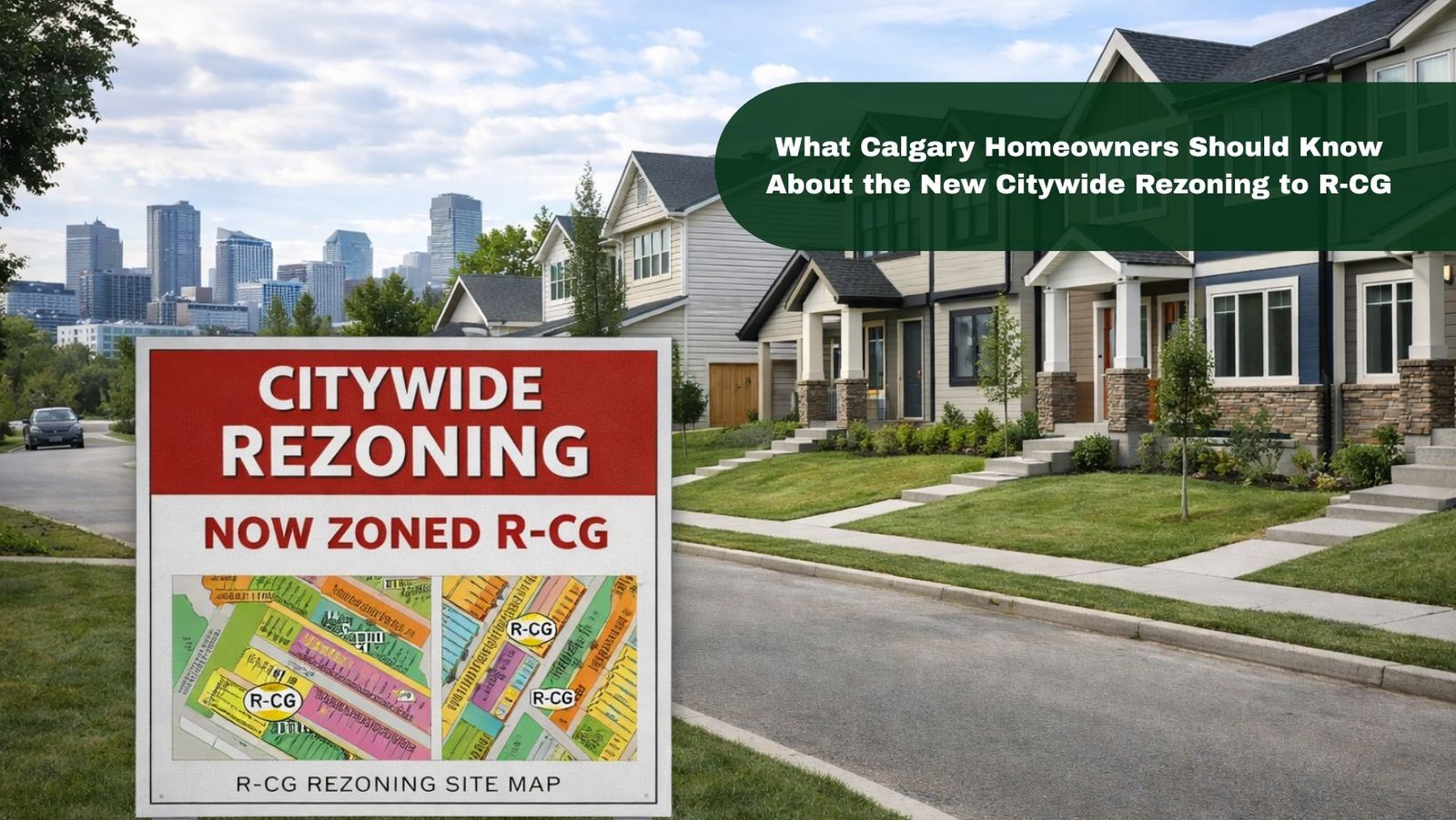
What Calgary Homeowners Should Know About the New Citywide Rezoning to R-CG

Introduction

In 2026, the city of Calgary introduced one of the biggest changes in planning history with a city-wide rezoning project called R-CG. This rezoning has a direct impact on residential neighborhoods in the city and all property owners, including buyers, sellers, and investors. The goal of the rezoning project is to provide more housing options and allow for more flexible development opportunities in neighborhoods that were only suitable for single-family detached homes in the past.

For most homeowners, the term R-CG may be unfamiliar, but the impact is very real. Knowing what R-CG means can help homeowners make informed decisions about their properties.

What Is R-CG Zoning

R-CG is short for Residential Grade Oriented Infill. It is a type of zoning that permits a broader range of low-density residential types on residential lots. Before the zoning, many residential areas were only allowed to have single-family detached homes or semi-detached homes in limited numbers.

Through the rezoning of R-CG in the city, residents are now allowed to build duplexes, row houses, and, in some instances, secondary suites or backyard suites on lots that were not previously allowed. The aim is to achieve what is called gentle density in the neighborhood, which is a higher density of homes without high-rise buildings.

Why Calgary Introduced Citywide Rezoning

Calgary has been experiencing significant growth in population. On the other hand, housing affordability has emerged as a concern. This is due to the lack of housing supply to meet the growing demand.

The rezoning of Calgary to R-CG rezoning is part of the housing plan to meet the challenges. Calgary is trying to spread growth by allowing various types of housing in the city instead of focusing on specific locations.

Raising the number of units that can be developed on existing land helps to increase supply. This can help to ease the pressure on prices in the future and create more entry-level ownership.

How R-CG Rezoning Affects Homeowners

For those who are already homeowners, R-CG rezoning brings new opportunities. A piece of land that could only accommodate one detached house before can now be developed to accommodate multiple units. This brings more flexibility to land use and may even increase the value of the land in some areas.

Homeowners who are planning to sell their properties may see an increase in the number of people interested in buying their property, especially from developers who are interested in redeveloping the land. Land in prime locations near public transportation, schools, and business districts may be in high demand.

For those homeowners who decide not to sell but to stay in their properties, the rezoning gives them the opportunity to develop a secondary suite or a backyard suite, depending on the guidelines imposed by the city. This will allow families to stay in their communities while also earning money from the rental suite.

What It Means for Property Values

Offices rezoning the entire city does not necessarily raise property value, but it may affect market perception. If the land has the potential for higher density, the developer may consider it more valuable for redevelopment.

In already developed areas with high demand, properties zoned R-CG may attract more buyers interested in constructing duplexes or row houses. This may drive up the value of lots, especially in the inner city.

But not all properties will be affected equally. It is up to the homeowner to determine the impact on their area before making any decisions.

Impact on Neighborhood Character

One of the concerns of the residents is whether rezoning the city will result in a drastic change in the character of the neighborhoods. The R-CG classification is intended to encourage low-rise and ground-oriented development instead of high-density towers.

Row houses and duplexes are usually restricted in terms of height and scale to match the existing homes. The aim is to achieve a gradual density instead of a drastic change. Eventually, the neighborhoods will experience more housing variety, but the residential character will be retained.

Infrastructure planning is also involved. The city takes into consideration the proximity to transit, schools, and services in supporting density to ensure that the communities remain functional and livable.

Opportunities for Investors and Builders

For investors and small-scale developers, the R-CG rezoning brings new opportunities. Some lots were only good for one dwelling unit, but now they can be used for multi-unit projects. This will improve the viability of projects and give better returns.

Developers can focus on building duplexes or row houses that will appeal to first-time buyers who are looking for more affordable alternatives to single-family homes. Small-scale infill projects can fill the gap between single-family homes and apartment complexes.

Long-Term Housing Market Effects

The citywide rezoning of R-CG is a long-term plan rather than a short-term fix. The increase in density is intended to support the housing market over the next ten years.

A more varied range of housing may help stabilize price increases by providing alternatives at various price levels. This includes entry-level ownership units and smaller family homes in established neighborhoods.

Conclusion

The rezoning to R-CG is a significant change in the use of residential land in Calgary. The rezoning allows for duplexes, row houses, and secondary suites in many neighborhoods, which will provide more housing and make it more affordable in the long run.

This rezoning is an opportunity for homeowners to redevelop their properties in a different way. It is also an opportunity for homeowners to earn rental income. For buyers, it is an opportunity to purchase a different type of housing. It is important to understand the zoning of R-CG in relation to your property.

Earn Rental Income with Basement Suites: How to Use Calgary’s $10K Incentive.

Introduction

Calgary homeowners search for effective solutions to help them control rising mortgage expenses while building wealth for their future needs. Homeowners can achieve financial success by developing legal basement suites, which are their most effective method. The strong rental market throughout the city, combined with limited housing options, has made secondary suites a highly effective income-producing option.

The City of Calgary provides financial support of up to 10000 dollars through its Secondary Suite Incentive Program to promote safe and legal suite development. The financial assistance enables essential safety improvements that help achieve compliance with building codes for basement suites. Homeowners benefit from reduced renovation costs and faster financial payback. The opportunity allows investors to increase their property value while generating additional cash flow through monthly rental income.

Understanding Calgary’s 10 k Dollar Secondary Suite Incentive

The Secondary Suite Incentive Program was introduced as part of the city’s housing strategy to increase the number of safe and legal rental units. Many basement suites in the past were built without proper permits or safety measures. Homeowners now receive financial incentives from the city to achieve legal status for existing suites or construct new ones through city-approved upgrade costs.

Homeowners who meet the requirements can receive a maximum benefit of $10,000 after they complete recognized improvements and their work passes inspection. The Incentive is not simply free money. The system needs to ensure that all suites fulfill building requirements,d fire regulations, and safety requirements. The system protects homeowners and tenants while it helps Calgary increase its housing inventory.

What Expenses Are Covered Under the Program

The Incentive is specifically aimed at improving life safety, which is mandatory in building codes for secondary suites. The improvement is achieved by installing egress windows, which serve as escape routes in emergencies. The building code requires the installation of smoke and carbon monoxide alarms in accordance with certain installation requirements. There should be fire separation between the main dwelling and the basement suite to prevent the spread of fire.

Common enhancements undertaken by the organization include providing safe exit routes, upgrading the electrical system, and upgrading the heating or ventilation system to ensure comfortable airflow for tenants. The maximum reimbursement amount increases with each completed safety improvement.

The overall enhancements undertaken by the organization include the provision of safe exit routes, the upgrade of the electrical system, and the upgrade of the heating or ventilation system to ensure comfortable airflow for tenants. The maximum reimbursement amount increases with each completed safety improvement.

How Basement Suites Create Strong Rental Income

A legal basement suite in Calgary can provide a steady and reliable source of rental income. The basement suite rental income ranges from 1200 to 2000 dollars per month, depending on the location, size, and amenities of the suite. Rental income in these locations is in high demand, as individuals are interested in residing close to public transportation, educational institutions, and shopping centers.

The extra income from this source allows homeowners to reduce their mortgage payments each month. Homeowners primarily use income from this source to cover housing expenses, helping them save money and improve cash flow. The steady income from this investment source allows homeowners to build equity faster, as it increases their overall property value.

How to Be Eligible for the $10k Incentive

Homeowners should confirm the zoning regulations governing their property before building secondary suites. Certain regions enforce specific regulations that their residents must adhere to. People can avoid costly errors by consulting experienced real estate experts or researching municipal regulations.

After verifying eligibility, the process moves forward to developing building and development permit applications. Work should not begin until permits are approved. The process ensures that all upgrades match local building codes and industry standards.

Long-Term Benefits Beyond Immediate Cash Flow

There are many advantages to your statement that go beyond the original purpose of creating rental income. A house with a legal secondary suite will experience an increase in market value and demand at the time of sale. The potential for income generation from properties is the main draw for purchasers in the competitive Calgary market.

Calgary homeowners can add value to their property and earn rental income by constructing a legal basement suite. The City of Calgary provides up to $ 10,000 in the Secondary Suite Incentive to encourage homeowners to renovate and improve their financial security.

Conclusion

Calgary homeowners can use legal basement suites to generate income while building their property equity. The addition of an income unit to a property increases cash flow due to strong rental demand and rising property values. The Secondary Suite Incentive Program provides funding support to Calgary homeowners who need financing for eligible home improvement projects. Homeowners who meet safety standards, including permit requirements, can develop compliant rental properties that enhance their financial security.

Calgary’s Affordable Housing Strategy: What Changed in 2026

Introduction

One of the most topical issues in Calgary is the affordability of housing. The City has been experiencing rapid growth in population, and with this, the cost of construction has gone up. Moreover, the demand for rental accommodation has been steadily rising, making it difficult for individuals to afford housing. To overcome this problem, the City has updated its Affordable Housing Strategy in 2026 to ensure long-term sustainability in housing.

The updates in 2026 are expected to enhance the supply of housing in the City, irrespective of the cost. The strategy seeks to ensure faster approvals, flexibility in zoning, financial rewards, and collaboration. These updates are having a significant impact on how individuals perceive real estate in Calgary.

Faster Approvals and Reduced Red Tape

Among the most significant updates in 2026 is the emphasis on faster approvals of developments. Previously, the slow process of approving permits was one of the issues that slowed down the development of housing. The City has made it simpler for developments that qualify for affordability.

In this way, by cutting down on administrative delays, developers will be able to go from the planning stage to the construction stage more quickly. This will help to reduce holding costs and will enable new housing units to enter the market more quickly.

This change indicates that the City understands that the speed of supply is a key element in managing housing costs. By speeding up development, it is hoped that the pressure on both rental and resale markets will be alleviated.

Expanded Support for Secondary Suites

Secondary suites are also a key component of the new strategy. The City enhanced programs that encourage homeowners to build legal secondary suites in their basements and backyard suites. Financial assistance is provided to offset the costs of safety upgrades, permits, and compliance.

Through the promotion of secondary suites, the City of Calgary is able to provide more rental units without necessarily focusing on high-rise buildings. This strategy enables the City to develop new neighborhoods with increased housing density without changing their character.

For homeowners, the development of legal secondary suites provides an opportunity to earn rental income that can help offset the costs of a mortgage. Legal secondary suites also enhance tenant safety and standards in neighborhoods.

Zoning Reform and Increased Housing Density

The 2026 strategy continues the momentum of previous zoning reforms that have increased the types of housing allowed in what were once single-family neighborhoods. This gives property owners the ability to build duplexes, row houses, and multi-unit structures in areas that were once zoned against such development.

This is a positive step towards a goal that urban planners refer to as gentle density. Rather than focusing development on a few high-rise hubs, development can be spread more evenly throughout the city. This makes development more affordable by providing more entry-level ownership opportunities.

Zoning reform is also a positive step towards better land use. More people can live in closer proximity to transit corridors, schools, and commercial hubs. This cuts down on commute times and promotes sustainable development.

Stronger Public and Private Partnerships

Another significant update in 2026 is the focus on collaboration between the City, private developers, and non-profit housing organizations. Affordable housing projects may need collaboration on funding and risk management.

The City is using public land for affordable projects and financial instruments that appeal to long-term investors.
Collaboration with experienced developers and housing organizations can help projects advance more quickly and reach the desired income level.

Public-private partnerships can ensure a balance between profit and public good. Developers will have better incentives, and residents will have more opportunities for below-market-rate housing. This approach is crucial to the long-term success of the strategy.

Financial Incentives and Long-Term Targets

The revised Affordable Housing Strategy also sets out more specific long-term objectives. The City has set out specific objectives to boost the supply of housing over the coming decade. These objectives are accompanied by funding programs, infrastructure investment, and policy changes.

Financial incentives could be in the form of grants, fee waivers, or tax incentives for projects that satisfy affordability criteria. Infrastructure investments such as enhanced transit and the extension of utilities make new developments more attractive.

Long-term planning ensures that affordability is kept on the agenda regardless of market trends in the short term. With specific objectives and monitoring of progress, the City can make changes to policies as required while keeping everything transparent.

Impact on Buyers, Sellers, and Investors

The implications of the 2026 changes are relevant to all parties involved in the real estate market in Calgary. Buyers may have more housing available to them, especially in the entry-level and multi-unit markets. Sellers in areas that support higher density may benefit from the increased land value.

Investors may have new opportunities in secondary suites, duplexes, and small-scale redevelopment projects. The focus on supply growth establishes a scenario that promotes sound investment to meet the housing demand.

Renters will benefit from the increased supply, which will reduce competition for housing and eventually lead to a stable rental market. While adjustments in the market do not occur immediately, the increased activity in construction will promote affordability in the long term.

Conclusion

The 2026 changes to the Affordable Housing Strategy in Calgary represent a holistic approach to dealing with shortages and accessibility. Through easier approval processes, increased zoning, partnerships, and financial incentives, the City is working to create a balanced housing market.

The changes are creating a new landscape in terms of development and opportunities for homeowners and investors. Although affordability is a complex issue, the new strategy is a systematic and forward-looking approach to promoting sustainable growth in the Calgary housing market.

Do you have questions?

Call or text today, we are here to help!

+1 403-483-3300