
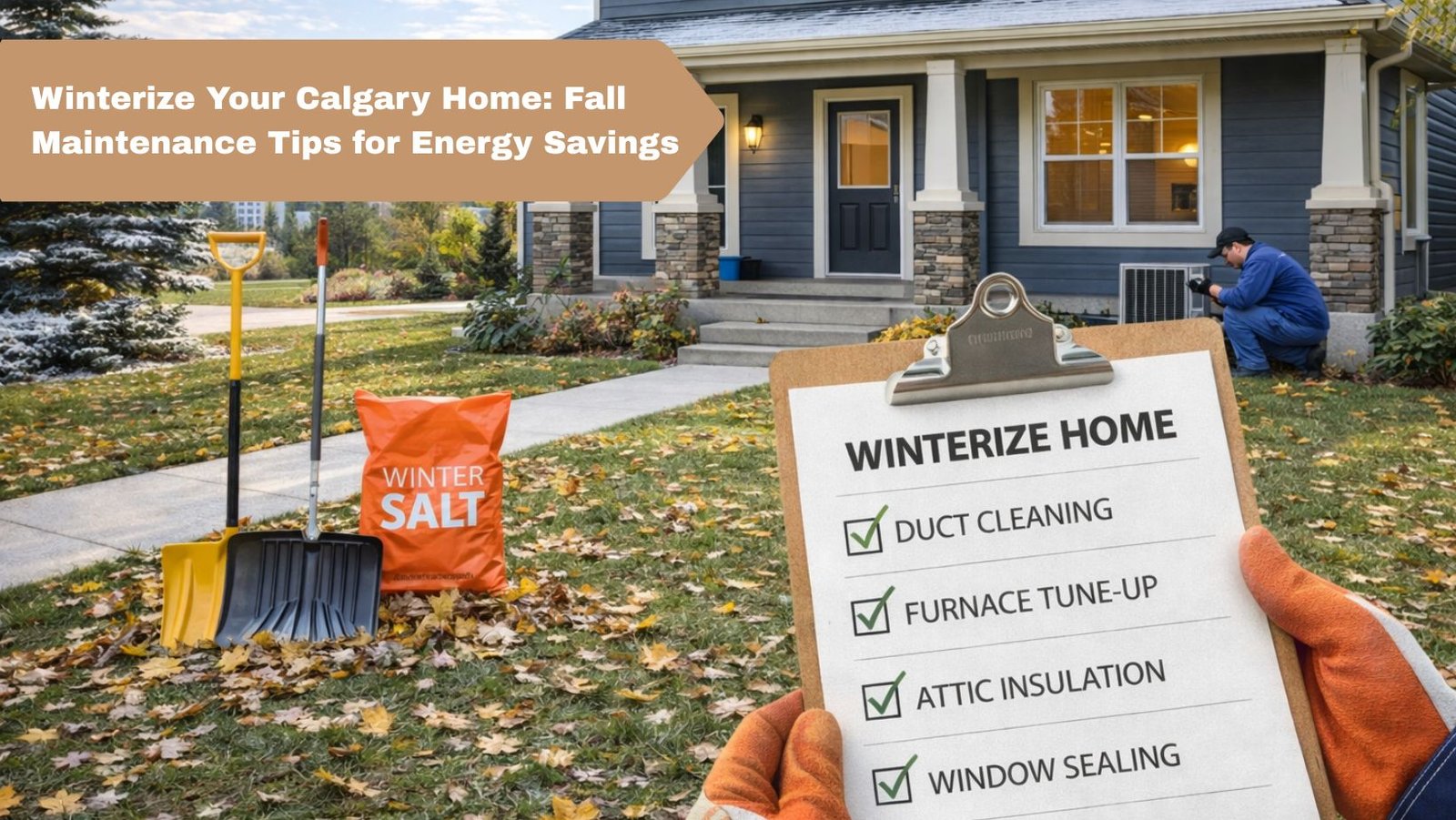
Winterize Your Calgary Home: Fall Maintenance Tips for Energy Savings
Apr 23, 2026
- 0
Introduction
As the temperature gradually decreases in Calgary, homeowners need to prepare their homes to withstand the long, cold winter months. Winters in Alberta are notorious for extreme cold snaps, heavy snowfall, and chinook winds that often bring cycles of freezing and refreezing. Without proper preparation, these conditions can result in costly energy consumption, unnecessary repairs, and additional stress to your home.
Fall is the best season to winterize your home. Pre-winterization is not only good for your home but will also help reduce energy consumption, lower heating costs, and keep your family warm and cozy throughout the cold season.
Inspect and Service Your Furnace
Your furnace will be working harder than any other appliance in your house throughout a Calgary winter. Before the consistent freezing temperatures begin, arrange for a professional furnace inspection and tune-up. This will clean internal components and ensure that your furnace is running efficiently.
Change the furnace filters frequently, such as every one to three months. This will help to clean the air and lower the cost of furnace operation. In older furnaces, fall is a good time to think about the efficiency rating of your furnace. Replacing it with a high-efficiency furnace can lower your utility costs.
Seal Drafts Around Windows and Doors
One of the most common reasons for high energy consumption in winter is the loss of heat through windows and doors. Even a small opening allows cold air to leak in and warm air to leak out.
First, check the weatherstripping of all the doors opening to the outside. Replace the weatherstripping if it is cracked and worn out. Use caulking to seal all openings around the windows where there is a gap. For older windows, a solution is to use plastic insulation film.
In Calgary, drafts can definitely reduce comfort and lower energy bills. Even small improvements to air sealing can have a big effect in the long term.
Inspect and Clean Gutters
Leaves and other debris falling from the trees usually accumulate in the gutters. This hampers smooth drainage, and if the temperature falls, ice forms. Such ice dams can damage the roofs of the house and allow water to seep into the walls or ceilings of the house.
Ensure that the gutters are clean and that the water drains away from the house through the downspouts. Also, check that water is flowing freely through the gutters to avoid pooling around the base of the house.
Check Roof and Attic Insulation
Your roof and attic have a major role to play in retaining heat. Without proper insulation, warm air tends to escape, leading to an increase in consumption and the formation of ice dams.
Check your attic insulation level. Adding extra insulation can help save a lot of heat. In addition, look for moisture and ventilation problems. Adequate attic ventilation helps in maintaining temperature and preventing condensation during winter.
Check your roof for damaged shingles and flashing. Repair your roof before snowfall. Preventative maintenance in the fall is always better and easier to do than repairs in January.
Protect Exterior Plumbing
A major concern in frozen winters in Alberta is frozen pipes. First, remove any garden hoses and close any outdoor water valves if accessible. Also, drain any water left in outdoor hoses to prevent freezing.
When inside, you should insulate any exposed pipes in unheated areas, such as a basement, a crawl space, or a garage. These types of insulation for exposed pipes are readily available and inexpensive.
If you plan to leave your house during the winter months, it is a good idea to set your thermostat to a consistent temperature and ask a friend to check on your house periodically.
Upgrade to a Programmable or Smart Thermostat
However, it is not only about insulating and sealing. Temperature management is also a key factor in the overall improvement of the home’s energy efficiency.
Having a programmable or smart thermostat is a wonderful way to regulate the temperature according to your schedule. By lowering the temperature while you’re sleeping or away from home, you can save a significant amount on your utility bills without compromising comfort.
Inspect Windows for Condensation and Damage
Sometimes, cold weather is a good way to expose any issues with the windows. For example, if you notice too much condensation between the window panes, it is a possible indication of a failed window seal. When windows are damaged, they lose their insulating properties.
While replacing the windows may not be the solution, you can try fixing the window seal or using window coverings such as thermal curtains.
Long-Term Energy Savings Benefits
Therefore, winterizing your Calgary house is not just about preventing emergencies but also about cutting down on energy wastage and living comfortably in your house. These simple changes can make a huge difference in saving money on heating costs over a long winter in Alberta.
Efficient homes mean higher resale value, too. Homebuyers are increasingly seeking homes that cost less to operate and have good systems in place.
Conclusion
Preparing your Calgary home for the coming winter season is one of the most astute financial decisions that you can make. From furnace maintenance to draft-proofing, and from insulation to plumbing, all these measures will not only reduce your energy consumption but also provide comfort. This is because winters in Alberta are known to be harsh, and a well-prepared home is a warm and cozy home.