
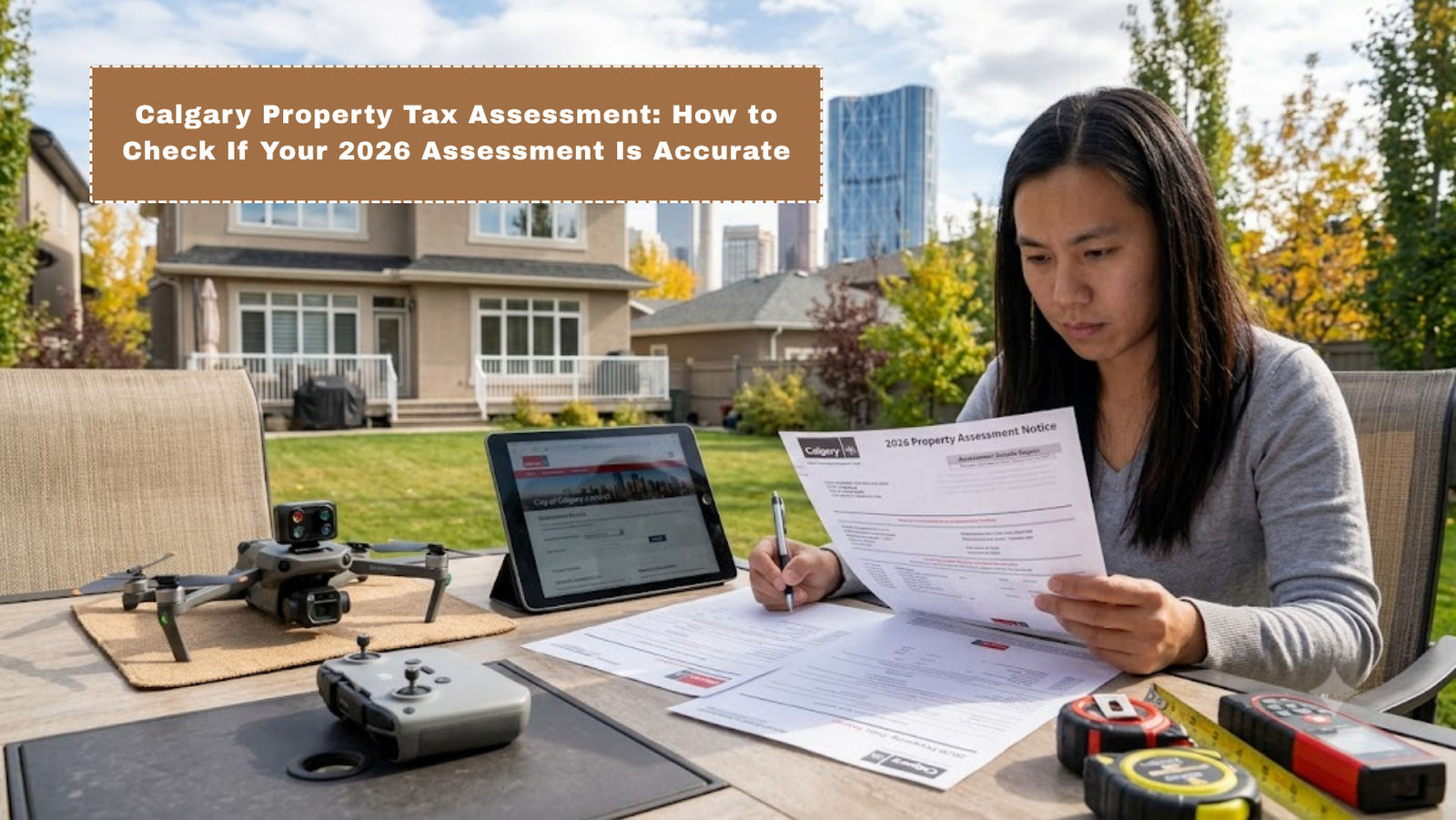
Let me guess how it went. Back in January, an envelope from the City of Calgary showed up in your mailbox. You opened it, saw a big number, felt either a little smug or a little sick, and then tucked it under a pile of mail you’d deal with “later.”
Most of us do exactly that. But that number quietly decides your share of the city’s property tax, and if the details behind it are wrong, the mistake doesn’t fix itself. The good news is that checking it takes about an hour, and you don’t need any special training to do it.
First, a quick reality check on timing
The city mailed the 2026 notices on January 14, 2026, and the last day to file a formal complaint was March 23, 2026. So if you’re reading this now, that window has closed. Please don’t click away, though. There’s still plenty worth doing, and I’ll walk you through it further down.
Your assessment is not your tax bill.
This one trips up almost everyone. The assessment is the city’s estimate of what your property was worth. The tax bill is a separate document that shows up later and turns that value into dollars.
Here’s the part that surprises people: a higher assessment doesn’t mean the city suddenly collects more money. The city and the province set how much needs to be raised overall, and your assessment simply decides your slice of that pie compared with everybody else’s. So the real question is whether your value moved more or less than similar homes around you. If you’d like the full picture, our guide to Calgary property taxes walks through it.
What that number really represents
Two dates matter. The value is an estimate of what your property would have sold for on July 1, 2025, and the physical condition of your home is measured as of December 31, 2025. So if you finished your basement in March 2026, it won’t be in this year’s number. And if you compare the assessment with today’s asking prices, you’ll probably feel misled, because the market has moved since last summer.
How I’d go through your notice
Grab a coffee and your notice, and start with the boring bits. Is the address right? Is your name spelled correctly? Is the property listed as the right type?
Next, look at the details the value is built on: lot size, living area, year built, whether the basement is developed, and whether there’s a garage. The city’s website lets you look up the information it holds on your property. Compare it with what you actually know to be true. A wrong square footage number, for example, can throw the value off in a way that has nothing to do with the market.
Then do a gut check. The Assessment Review Board gives a handy rule of thumb: would it have been reasonable for your home to sell for about that amount on the valuation date? Look at what similar homes nearby actually sold for around July 2025, rather than what similar homes are listed for now.
Finally, think about what changed in your home before the end of 2025. A new addition, a renovation, or something like water damage can all matter. And if you’d like to see what the number means in real money, the city has an online tax calculator where you can plug in your assessed value.
The mistakes that show up most often
The usual suspects are a wrong lot size or living area, a basement recorded as finished when it isn’t (or the other way around), a garage or deck that doesn’t exist or is missing, and the wrong property type. It’s also worth asking whether any damage or condition issue was missed. None of these are dramatic, but each can nudge your value in the wrong direction.
If something looks off
Start by calling the city’s assessment team, either through 311 or the number on your notice. For a plain factual error, they can often correct it without any formal process. If you can’t reach an agreement, you can file a complaint with the Assessment Review Board, which is independent of the city. You’ll find the process at calgaryarb.ca and on the city’s review period page.
Bring evidence if you go that route: recent sales of comparable homes, photos, inspection reports, or an appraisal. The ARB says most complaints get resolved before a hearing, and the filing fee is generally refunded if you succeed or settle. The exact fee is printed on your notice.
Missed the deadline? Here’s what I’d do
First, check your property details anyway. Errors can repeat year after year. Second, call the city and ask what options exist for correcting a factual mistake now. Third, put a reminder in your calendar for January, when the next notices usually arrive, and spend the year collecting evidence like comparable sales, photos, and renovation receipts.
And if you’re thinking about selling, keep your records tidy. Our checklist of documents you need to sell a house in Calgary shows what buyers and lawyers will want to see. If you own a condo, it’s also worth understanding the wider picture through our post on Calgary condo market trends.
One thing people often ask
“Will my assessment change what my home sells for?” Not directly, but it does play a supporting role. We wrote a whole companion piece on that: how property assessment can affect your Calgary home’s resale value.
Quick Questions
Is my assessment the same as my home’s market value?
It’s an estimate of market value on a set date, July 1 of the previous year. Think of it as a snapshot, not a live number.
Will a lower assessment lower my tax bill?
Not always. Your bill depends on how your value compares with other properties and on the tax rates set each year.
Do I need a lawyer or agent to file a complaint?
No, owners can file on their own. Some people prefer help for complicated cases.
Not sure whether your assessment lines up with what your home would really sell for? Reach out to Jai Chaudhary Real Estate, and we’ll take a look together. You can also find more homeowner guides on our blog.