Money questions are the ones people are most nervous to ask. How much does an agent cost? Who pays the lawyer? What’s a “closing cost” anyway? Let’s answer them plainly, without any jargon.
One quick note before we start: the figures below are typical ranges meant to help you plan. Actual amounts depend on your home, your brokerage, and your lawyer, so always confirm details in writing.
The Big Picture
In a typical Calgary sale, the seller pays the real estate commission, and the buyer pays for their own legal work, inspection, and land title fees. Both sides have some closing costs. The good news is that Alberta has no land transfer tax, which keeps buying costs lower than in several other provinces.
What Sellers Usually Pay
Real estate commission
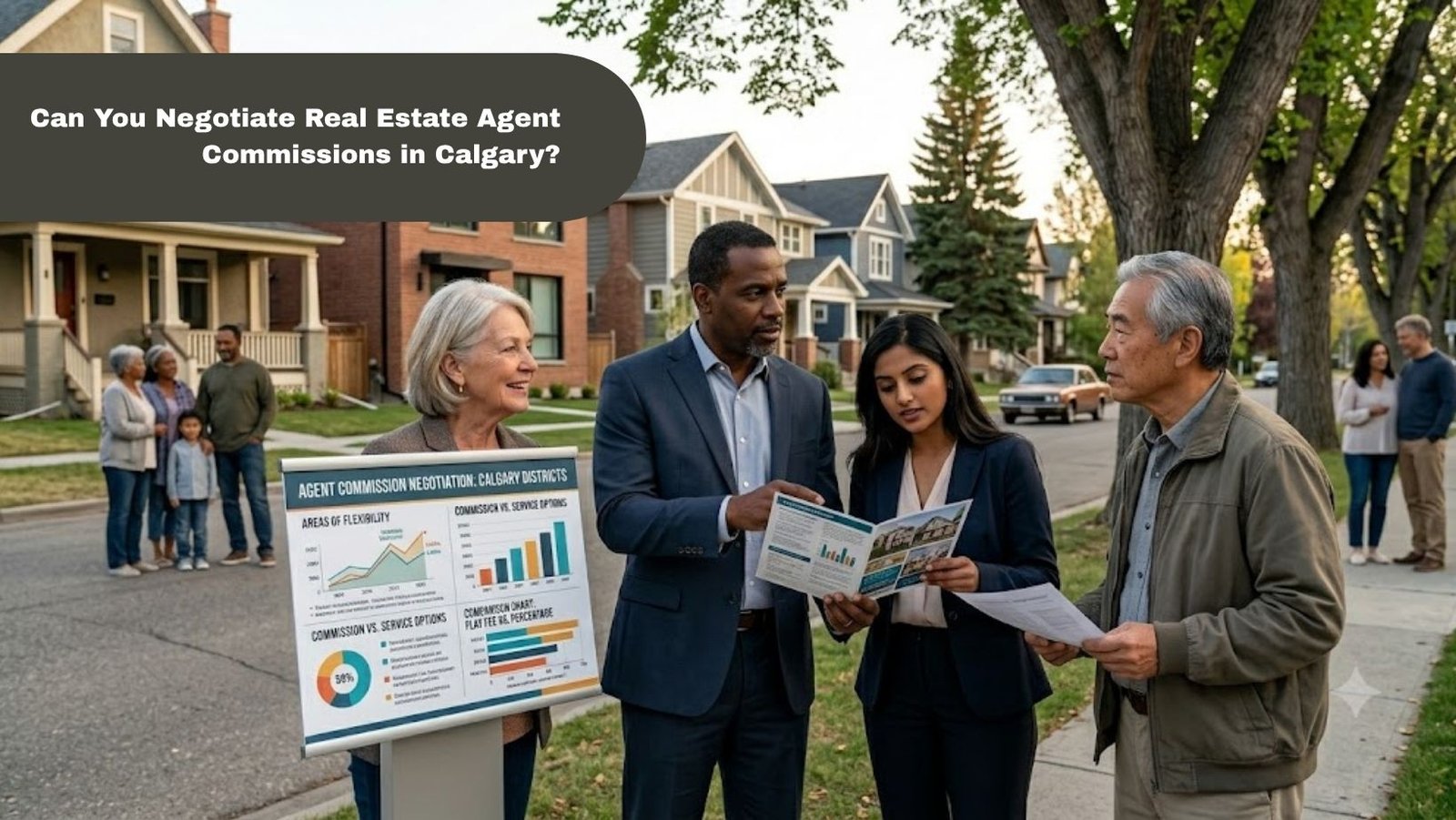
This is the highest cost for most sellers. Commission is not set by law, and it’s negotiable. In Calgary, it’s commonly structured as a percentage of the sale price, sometimes with a higher rate on the first part of the price and a lower rate on the rest, and it’s normally shared between the listing brokerage and the buyer’s brokerage. GST is added on top of commission. Ask your agent for the exact numbers in writing. Our post on how long an agent can hold your listing shows where this fits in the contract.
Legal fees
Your lawyer handles the transfer of title, pays out your mortgage, and prepares the statement of adjustments. Fees vary, so get a quote up front.
Mortgage payout and penalties
If you break your mortgage before the term ends, your lender may charge a penalty. It can be a significant amount, so ask early.
Real Property Report and Compliance
A current RPR with municipal compliance is usually needed. See our full seller document checklist for details.
Preparation costs
Staging, cleaning, minor repairs, professional photos, and condo document fees can add up. Some agents include certain services, so ask what is covered.
Property tax and utility adjustments
On closing day, taxes and other prepaid or owing items are split between buyer and seller. For a primer, read our Calgary property tax guide.
What Buyers Usually Pay
- Down payment. The biggest upfront amount.
- Legal fees and disbursements. For the transfer and mortgage paperwork.
- Land title transfer and mortgage registration fees. Alberta charges a base fee plus an amount for every $5,000 of value. At the time of writing, that is roughly $50 plus $5 per $5,000 for the title transfer and $75 plus $5 per $5,000 for the mortgage registration. Check current rates with your lawyer.
- Home inspection. A smart investment in any resale home.
- Appraisal or lender fees, if your lender requires them.
- Title insurance. Often arranged by the lawyer.
- Property tax adjustments at closing.
- Condo document fees, if buying a condo.
- GST, if you’re buying a brand-new home.
Wondering whether you need an agent at all on the buying side? Re: Do you really need a realtor to buy a house in Calgary?
A Simple Example: Selling a $600,000 Home
These figures are for illustration only. Your real numbers will differ.
| Cost item | Example amount | Notes |
| Total commission at 4% | $24,000 | Negotiable; not set by law |
| GST on commission (5%) | $1,200 | Added on top of commission |
| Legal fees | About $1,000 to $2,000 | Get a quote from your lawyer. |
| RPR and compliance | About $500 to $1,000 | Depends on the surveyor and timing |
| Photos, staging, cleaning | Varies widely | Some agents include part of this. |
| Mortgage penalty | Depends on your lender | Ask before you list. |
A Simple Example: Buying a $600,000 Home
Using the fee formulas above, the land title transfer on a $600,000 purchase comes to roughly $650, and registering a $480,000 mortgage comes to roughly $555. Add legal fees, an inspection (often a few hundred dollars), and any appraisal or title insurance costs, and many buyers budget a few thousand dollars for closing costs on top of the down payment. Your lawyer can give an exact figure.
Smart Ways to Keep Costs Under Control
- Ask every agent to write out their commission structure and any extra fees.
- Get quotes from more than one lawyer.
- Ask your lender about penalties before choosing a possession date.
- Fix small things yourself, but skip big renovations that rarely pay back.
- Prepare your paperwork early to avoid rush fees.
- Use a written checklist so nothing surprises you.
Not sure which questions to ask about costs? Our list of questions sellers should ask before listing includes the money ones. And if you’re weighing the do-it-yourself route, selling privately in Calgary explains the savings and the trade-offs.
Frequently Asked Questions
Who pays the real estate agent in Calgary?
Typically, the seller pays the commission, which is then shared between the listing and buyer’s brokerages. Always confirm the arrangement in writing.
Is real estate commission fixed in Alberta?
No. It’s negotiable between you and your brokerage.
Does Alberta have a land transfer tax?
No. Alberta charges land title registration fees instead, which are usually much lower.
Are there fees if I cancel a listing?
It depends on your contract. Some agreements include cancellation or marketing cost terms, so read the fine print.
Final Thoughts
Want a personalized cost estimate for your sale or purchase? Reach out to Jai Chaudhary Real Estate, and we’ll map out the numbers together, with no surprises. There’s more to read on our blog.